
Fully online technical training designed around real industry demand, so you can specialize at your own pace.
11/07/2026
Start Date
7 months
Duration
750
Total Hours
8 Modules
Program
Duration
Total Hours
Program
Start Date
$3835

The Certificate in Behind-the-Meter Solar PV Systems from ICTESS is built to train specialists in the design, sizing, and installation of photovoltaic systems for residential, commercial, and industrial on-site generation. The program covers every technical phase of a solar project, from solar resource assessment through commissioning and monitoring of the installation.
You will learn the engineering calculations applied on real projects: energy production estimates using irradiance and loss factors, DC/AC design criteria with oversizing ratios, inverter selection by topology and rated power, battery storage (BESS) sizing, home energy management system (EMS) configuration, and utility interconnection and permitting procedures. The program includes an integrative case study in which you apply everything you have learned to single-family home and small business projects.
The Certificate in Behind-the-Meter Solar PV Systems answers the growing demand for technicians specialized in on-site solar installations. The residential and commercial solar market has grown sharply, driven by rising utility rates and the available tax incentives. Installation companies need professionals who command both the sizing calculations and the permitting process, along with storage system integration.
The purpose of the program is to train professionals capable of developing complete behind-the-meter projects from the initial assessment through commissioning. You will learn to calculate expected energy production for a given site, size the array to optimize the self-supply ratio, select inverters and batteries on technical and economic criteria, design electrical protections to the NEC (NFPA 70), and manage the process with the interconnecting utility and the authority having jurisdiction.
The training includes hands-on work with the professional software used in the sector (PVsyst, PVSOL, AutoCAD Electrical) and closes with an integrative case study in which you develop complete projects for a single-family home and a small business, applying every technical competency you have acquired.
The Certificate in Behind-the-Meter Solar PV Systems qualifies you for specialized technical roles at installation companies, renewable project engineering firms, solar equipment distributors, and the energy departments of companies with high electricity demand. You can work as a solar PV designer, sizing lead, installer specialized in on-site generation, or maintenance and monitoring technician for solar systems.
The program prepares you to manage behind-the-meter projects from the initial site visit through interconnection approval: running consumption and production studies, sizing installations to the customer’s demand profile, preparing technical reports and permit submittal packages, supervising rooftop installation work, and configuring monitoring systems to optimize performance.
You will also build the skills to advise customers on net metering, community solar, and non-export configurations, evaluate economic viability through payback and savings analysis, design hybrid systems with storage, and propose smart energy management solutions. The practical focus lets you apply what you learn to live projects right away.
Access the program from anywhere with no commuting. Fit your technical specialization around your current professional activity.
Organize your study around your own availability. Move through the modules whenever it suits you best and reinforce whatever you need.
Learn PVsyst, PVSOL, and monitoring tools. The same platforms installers and engineering firms use every day.
Technical video lessons, updated downloadable materials, forums with specialized instructors, and practical exercises.
With ICTESS you get specialized technical training built around professional practice, designed so you master the competencies the behind-the-meter solar sector is actually hiring for. Learn with an up-to-date methodology and real industry tools.
What you'll achieve
Calculate the energy production of photovoltaic installations by applying irradiance data, azimuth, tilt, and the loss factors specific to the site.
Size the photovoltaic array and select inverters by applying DC/AC ratio criteria, MPPT voltage compatibility, and optimization of on-site consumption against the demand profile.
Design DC and AC electrical protection systems, size conductors to NEC Articles 690 and 705, and configure safe, code-compliant grounding schemes.
Integrate battery storage systems (BESS) and home energy management systems (EMS) to maximize on-site consumption and manage excess generation intelligently.
Manage the complete permitting process: interconnection application, AHJ plan review and inspection, bidirectional meter configuration, and net metering enrollment.
Behind-the-meter solar has established itself as the renewable technology with the deepest penetration in the residential and commercial market. With capacity growing steadily year after year, the sector needs technical professionals able to design efficient installations, handle permitting and interconnection, and optimize systems with energy storage. Federal and state tax incentives have made this technology accessible to a far wider customer base.
High demand for specialized on-site solar technicians: Installation companies struggle to fill designer and qualified technician openings. The market needs professionals who command not only physical installation, but also technical sizing, the permitting process, and integration with increasingly sophisticated energy management systems.
The shift toward hybrid systems and smart management: Today’s projects incorporate battery storage, energy management systems, and EV charging integration, which calls for versatile professionals able to design integrated solutions that maximize customer savings and overall system efficiency.
A competitive edge over generalist installers: Technical specialization in behind-the-meter solar sets you clearly apart from electricians without specific training. Mastering production calculations, equipment selection criteria, the applicable codes, and professional software positions you as a go-to professional in an increasingly demanding market.
Completing the Certificate in Behind-the-Meter Solar PV Systems places you in one of the fastest growing segments of the energy sector. On-site solar has multiplied its installed capacity in recent years, creating steady demand for specialized technicians at installation companies, engineering firms, and solar equipment distributors.
Access to a rapidly expanding market: The residential and commercial solar segment keeps growing year after year. Installation companies are actively looking for technicians able to size systems, manage permitting, and optimize installations with storage, competencies that are scarce in today’s labor market.
Command of specific professional tools: Proficiency with technical software such as PVsyst and PVSOL sets you apart in hiring processes, since these are essential tools for producing the feasibility studies, technical reports, and production simulations professional clients expect.
Ability to deliver complete solutions: You will develop the competencies to advise customers technically, design hybrid systems with batteries, configure smart energy management, and optimize return on investment, which lets you add far more value than a conventional installer.
Recognized professional certificate: The ICTESS professional certificate documents your technical specialization in behind-the-meter solar PV systems, strengthening your position in the job market and validating your competencies with companies in the sector.
This certificate program is designed for technical professionals and graduates seeking to specialize in the design, sizing, and installation of behind-the-meter photovoltaic systems. Recommended profiles include:
Program details

The integrative case study is the culminating stage of the program and represents the practical application of every technical competency developed along the way. It consists of the complete development of two real behind-the-meter projects: one installation for a single-family home and one for a small business, applying the professional methodologies and calculation tools used in the industry.
Each project includes every technical phase of a professional on-site solar job: analysis of the customer’s consumption profile from utility bills, a solar resource study of the site accounting for azimuth, tilt, and shading, array sizing to optimize the self-supply ratio, technical selection of inverters using MPPT compatibility criteria, design of the DC and AC protection systems to the NEC, and integration with storage (BESS) and energy management where applicable.
The work also includes preparing the complete permit submittal package: design narrative, one-line diagrams, justifying calculations for conductors and protections, an economic viability analysis with payback and estimated savings, and the interconnection application forms for the utility. Final documentation must be presented at the technical level and professional format expected of solar project submittals, demonstrating your ability to develop complete projects ready for construction and interconnection approval.
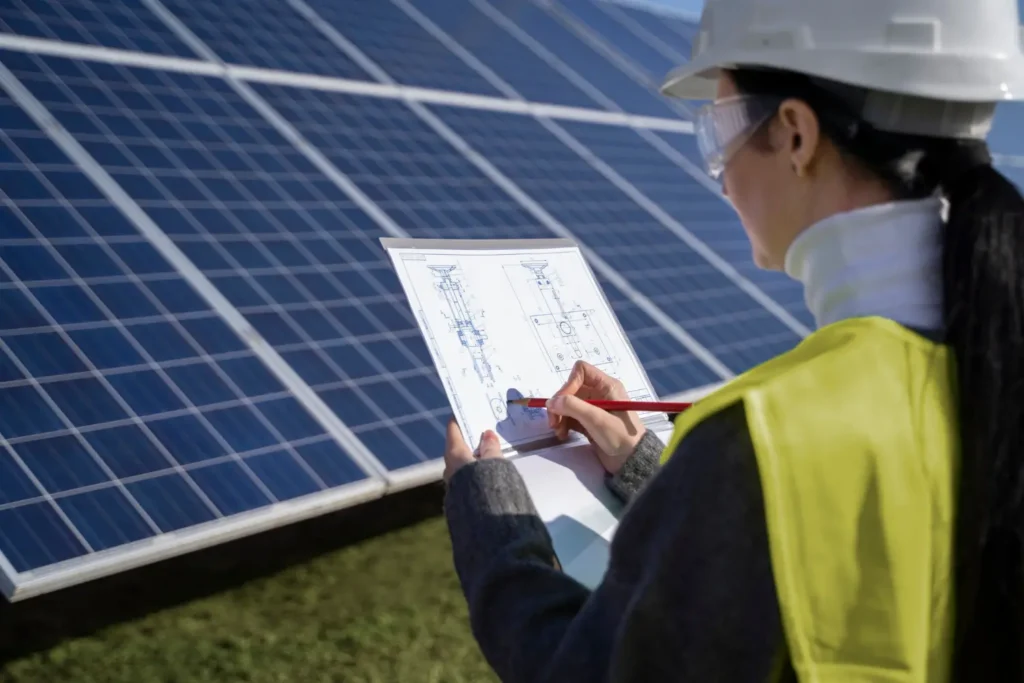
The Certificate in Behind-the-Meter Solar PV Systems from ICTESS includes hands-on training with the industry-standard technical tools: PVsyst for energy production simulation with detailed loss and shading analysis, PVSOL for sizing residential and commercial installations with 3D visualization, and monitoring and Performance Ratio analysis tools to evaluate the real output of operating systems. You will learn to use these platforms through real case studies, covering everything from entering consumption and irradiance data to generating professional technical reports and calculation packages. Command of these programs is highly valued by installation companies and engineering firms, since it allows you to produce accurate feasibility studies and rigorous technical documentation that builds customer confidence.
A license is not required to take the program, since the training focuses on the technical design and sizing of behind-the-meter installations. To physically perform the installation work, however, you do need the corresponding state electrical license and, where required, the certifications your jurisdiction and customers expect. The program is accessible to electricians looking to specialize, but also to engineers, industrial technicians, construction professionals, and energy sector professionals who need designer-level competencies without performing the physical installation. The content includes professional-level technical calculations, so prior knowledge of basic electricity, one-line diagram interpretation, and computer tools is recommended.
The ICTESS Professional Certificate attests to your technical specialization in behind-the-meter solar PV systems and is recognized by companies in the sector as high-level professional development. While it does not replace the mandatory professional credentials (a state electrical license, or NABCEP certification where customers require it), the certificate documents competencies that are in strong demand: code-compliant system sizing, command of professional industry software, knowledge of the permitting and interconnection process, and the ability to produce technical reports and feasibility studies. Installation companies and solar equipment distributors place particular value on this practical training as a complement to field experience, since it demonstrates current knowledge of the applicable codes, command of calculation tools, and a professional working methodology.
This Certificate in Behind-the-Meter Solar PV Systems stands apart for its specific focus on on-site generation and the technical depth of its sizing and systems integration content. Where many courses offer general photovoltaic knowledge or concentrate purely on physical installation, this program covers every competency of the professional designer: production calculation with real loss factors, DC/AC design criteria with oversizing ratios, technical inverter selection by topology, integration with batteries (BESS) and energy management systems (EMS), the complete permitting and interconnection process, and economic viability analysis. It also includes practical training with dedicated professional software (PVsyst, PVSOL) that basic courses rarely offer, and closes with real home and small business case studies you can add to your professional portfolio.