Course in Biomass Heating for Buildings

Fully online technical training designed around real industry demand, so you can specialize at your own pace.

10/31/2026

Start Date

1 month

Duration

100

Total Hours

6 Modules

Program

1 month

Duration

100

Total Hours

6 Modules

Program

10/31/2026

Start Date

Course in Biomass Heating for Buildings 1

Overview of the Course in Biomass Heating for Buildings

The Course in Biomass Heating for Buildings from ICTESS is built to train specialists in the design, installation, and maintenance of heating systems fueled by solid biomass fuels. The program covers the main biomass combustion technologies applied to residential, commercial, and industrial buildings with variable thermal loads.

You will work through the same sizing calculations used on real projects: boiler selection based on output and efficiency under the ASME Boiler and Pressure Vessel Code, design of automated fuel feed systems with silos and augers, layout of hydronic loops with buffer tanks, combustion control to maximize efficiency, and emissions management together with preventive maintenance. The course includes a Capstone Project in which you apply everything you have learned to a complete biomass installation.

Purpose of the Course in Biomass Heating for Buildings

The Course in Biomass Heating for Buildings responds to growing demand for technicians who specialize in renewable solid fuel heating. The sustainable HVAC sector needs professionals who can handle both the sizing of biomass boilers and the technical standards governing emissions under the EPA Clean Air Act, along with fuel selection criteria based on local supply and building characteristics.

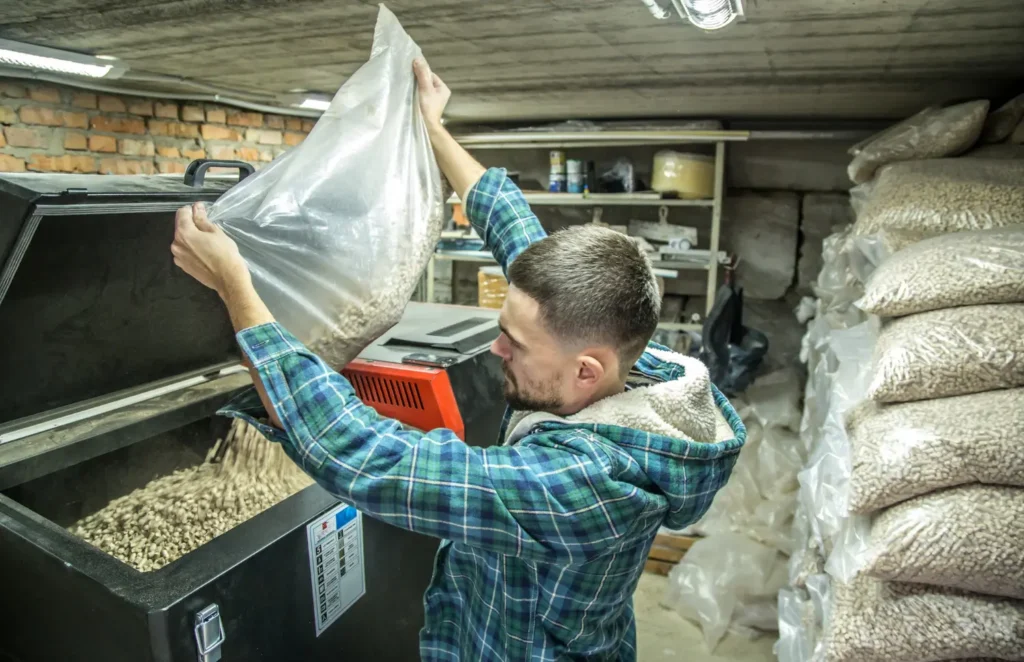
The course trains professionals to design and install complete biomass heating systems, from thermal load assessment to commissioning and service. You’ll learn to select biomass by heating value and moisture content, size boilers and feed systems, calculate hydronic circuits with thermal storage, configure combustion control systems, and set cleaning and maintenance protocols.

The training covers thermal calculation methods applied to biomass installations along with design criteria drawn from the International Mechanical Code (IMC) and applicable emissions standards. The program closes with a Capstone Project in which you develop a complete biomass heating design, applying every competency built across the modules.

What the Course in Biomass Heating for Buildings Prepares You For

The course qualifies you for specialized technical roles at mechanical contracting firms, biomass boiler manufacturers, solid fuel distributors, and building maintenance departments. You can work as a biomass installation technician, boiler room maintenance lead, thermal systems designer, or technical advisor on renewable heating systems.

The program prepares you to manage biomass heating projects from feasibility study through operation: running building thermal load analysis, sizing boilers and feed systems to code, producing hydronic schematics and technical narratives, supervising field installation, and fine-tuning performance through combustion parameter adjustment.

You will also gain the skills to advise clients on available biomass fuels, calculate consumption and operating costs, build preventive maintenance strategies, and confirm compliance with emissions requirements. The applied approach means you can put what you learn to work on live installations right away.

Reasons to Choose ICTESS

100% Online Training

Study from anywhere, with no commuting. Fit your technical specialization around the job you already have.

Study at your own pace.

Organize your study around your own schedule. Move through the modules when it suits you and revisit any topic you want to reinforce.

Applied Technical Methodology

Learn from real biomass installation cases. Sizing exercises, hydronic schematics, and the same calculations used in the field.

Advanced Virtual Campus

Technical video lessons, updated downloadable material, forums with specialized instructors, and hands-on exercises.

With ICTESS you get specialized technical training, geared to professional practice and designed so you master the skills the biomass heating industry is asking for. Learn with up-to-date methodology and real-world installation criteria.

What you'll achieve

Objectives of the Course in Biomass Heating for Buildings

Curriculum

01Module 1: Biomass fuels: types and storage
  • Classification of biomass fuels: pellets, wood chips, olive pits and almond shells
  • Technical characterization: heating value, moisture content, particle size and bulk density
  • Storage requirements: sizing, ventilation and fuel preservation
02Module 2: Boilers and combustion control
  • Biomass boiler types: fixed grate, moving grate and combustion systems
  • Thermal output sizing based on load and seasonal efficiency
  • Combustion control systems: lambda probe, modulation and flame optimization
03Module 3: Silos, augers and safety
  • Storage silo design: geometry, materials and capacity based on consumption
  • Automated feed systems: augers, flexible spring conveyors and pneumatic transport
  • Safety requirements: fire and explosion prevention and protective devices
04Module 4: Hydronics and buffer tanks
  • Design of primary and secondary hydronic circuits in biomass installations
  • Buffer tank sizing: storage volume and thermal stratification
  • Hydronic components: circulation pumps, mixing valves and expansion tanks
05Module 5: Emissions and cleaning
  • Emissions control: particulates, CO and NOx under air quality requirements
  • Flue gas venting systems: chimneys, draft and installation requirements
  • Maintenance and cleaning: heat exchangers, ash removal and inspection intervals
06Module 6: Capstone Project
  • Technical project development: complete sizing of a biomass installation
  • Supporting calculations: thermal load, equipment selection and hydronic schematic
  • Technical documentation: project narrative, budget and maintenance plan

RENEWABLE ENERGY FACULTY

Train for a career the industry actually needs

Importance of the Course in Biomass Heating for Buildings

Biomass heating continues to expand as building owners work to decarbonize existing stock. Ambitious targets for replacing fossil fuel boilers keep moving forward, and thermal biomass stands out as a competitive alternative, especially in rural areas and in buildings with high heating demand. That context is generating steady demand for technicians who specialize in biomass installations.

Shortage of specialized professionals: The HVAC installation market has relatively few technicians who truly know biomass technology. The particulars of these systems, including automated feeding, combustion control, ash handling, and emissions requirements, call for specific training that most professionals in the field do not currently have.

A technology with clear competitive advantages: Biomass delivers lower operating costs than heating oil and natural gas in many applications, along with energy independence and carbon-neutral combustion. Professionals who can size these systems correctly and guarantee their performance are increasingly sought after by owners looking to cut their energy bills.

Professional differentiation within the HVAC sector: Specializing in biomass sets you clearly apart from generalist installers. Mastering boiler sizing, feed systems, dedicated hydronic circuits, and maintenance protocols makes you the go-to professional for projects built around this renewable technology.

Benefits of the Course in Biomass Heating for Buildings

Completing this course places you in a growing market driven by decarbonization policy and rising fossil fuel costs. Thermal biomass is gaining ground across single-family homes, multifamily buildings, hotels, and industrial facilities, with new installations commissioned every year.

Entry into a specialization that is in demand: You can set yourself apart as a biomass specialist rather than a generalist HVAC installer. Companies in this field look for professionals who know the technology end to end, from sizing through maintenance, which opens the door to larger projects and greater technical responsibility.

Command of an expanding technology: The biomass boiler market keeps growing, pushed by incentive programs and by fuel costs that compete well against heating oil and natural gas. Specializing now positions you inside a sector with sustained growth ahead of it.

Ability to deliver a full service offer: You will build the skills to advise, design, install, and maintain complete biomass heating systems, which lets you offer turnkey solutions to clients who want a renewable fuel option.

Recognized professional certification: The ICTESS professional certificate backs your technical specialization in biomass heating systems, strengthening your standing in the job market and validating your skills in front of contractors and end clients.

Who the Course in Biomass Heating for Buildings Is For

This course is designed for technical professionals and graduates who want to specialize in the design, installation, and maintenance of biomass heating systems. Recommended profiles include:

  • HVAC and heating installers who want to broaden their service offer with biomass systems as a renewable alternative to conventional gas and oil boilers.
  • Building maintenance technicians responsible for boiler rooms who need specific skills to run biomass installations with full technical confidence.
  • Graduates in energy, mechanical, or building engineering interested in specializing in renewable thermal generation with direct application in sustainable construction.
  • Professionals in biomass fuel distribution, covering pellets, chips, and pits, who want to understand their clients’ installations well enough to offer qualified advice and full service support.
  • Technicians at boiler manufacturing companies who need to go deeper into sizing, installation, and maintenance criteria in order to provide qualified technical support to installers and end clients.

Program details

Logotipo-ICTESS-Dorado-1776x2048-1

Capstone Project of the Course in Biomass Heating for Buildings

The Capstone Project is the culminating stage of the program and represents the practical integration of every technical skill developed along the way. It consists of the full development of a biomass heating installation project, from thermal load analysis through the proposed operation and maintenance plan, applying the professional methodologies and sizing criteria used in the field.

The project is developed for a representative building, such as a single-family home, a multifamily property, a hotel, or an industrial facility. You will calculate the thermal load based on construction characteristics and occupancy, select the most suitable biomass fuel by availability and logistics, size the boiler by output and combustion technology under ASME BPVC, design the storage and feed system with silos and augers meeting NFPA 664 requirements, and calculate the complete hydronic circuit with buffer tanks and distribution.

The project also includes the design of the combustion control system, the specification of safety devices to code, emissions calculations under EPA Clean Air Act requirements together with the flue gas venting system, and a preventive maintenance plan with cleaning and inspection intervals. The final documentation must be delivered at the technical level and professional format expected of a permit submittal package, demonstrating your ability to produce complete technical documentation that meets current mechanical and emissions requirements.

Course in Biomass Heating for Buildings 3
Common Questions

Frequently Asked Questions About the Course in Biomass Heating for Buildings

The Course in Biomass Heating for Buildings from ICTESS covers the main solid fuels used in thermal installations: wood pellets, the most widespread option thanks to their automation and stable heating value; wood chips, an economical choice for larger outputs; olive pits, highly competitive in olive producing regions; and almond shells, a local alternative in almond growing areas. You will learn to evaluate each biomass type by its lower heating value (LHV), moisture content, particle size, bulk density and ash content. These parameters determine the sizing of the storage system, the feed technology required, and the most suitable boiler type. You will also work through selection criteria based on local availability, supply logistics and cost per thermal kWh generated.

A contractor or installer license is not required to take the course, although prior technical training in electrical work, plumbing, HVAC or related building systems is recommended. The course is designed both for professional installers who want to specialize in biomass and for maintenance technicians, designers and engineering graduates seeking specific skills in this technology. The content includes technical sizing calculations, hydronic circuit design and equipment selection criteria, so it is important to be able to read technical schematics and handle basic thermodynamics and hydraulics concepts. To perform installation work professionally, you will still need to meet the licensing requirements set by your state or local jurisdiction.

The ICTESS Professional Certificate backs your technical specialization in biomass heating systems and documents specific skills that are highly valued in the field: boiler sizing, feed system design, hydronic circuit calculation and maintenance protocols. While it does not replace the professional licensing that local regulations may require in order to perform thermal installation work, the certificate demonstrates specialized training that complements your base qualification. Many contractors, boiler manufacturers and biomass distributors place real weight on this kind of technical training during hiring, since it certifies current knowledge in a specific technology that generalist HVAC programs rarely cover in depth.

The Course in Biomass Heating for Buildings stands apart through its exclusive focus on thermal biomass technology and its practical emphasis on installation sizing. Where many renewable energy courses offer a broad survey of multiple technologies, this program goes deep into every technical aspect of biomass heating: fuel types and their characteristics, boiler technologies and combustion control, storage and automated feed systems, dedicated hydronic circuits with buffer tanks, emissions requirements, and maintenance protocols. The content includes the real sizing criteria that working professionals use to design installations, not just general theory. The course also addresses practical concerns such as silo safety under NFPA 664, ash management, and performance optimization through combustion parameter adjustment.


Ready to start

Take the next step in your technical career