
Fully online technical training designed around real industry demand, so you can specialize at your own pace.
10/31/2026
Start Date
2 months
Duration
100
Total Hours
6 Modules
Program
Duration
Total Hours
Program
Start Date
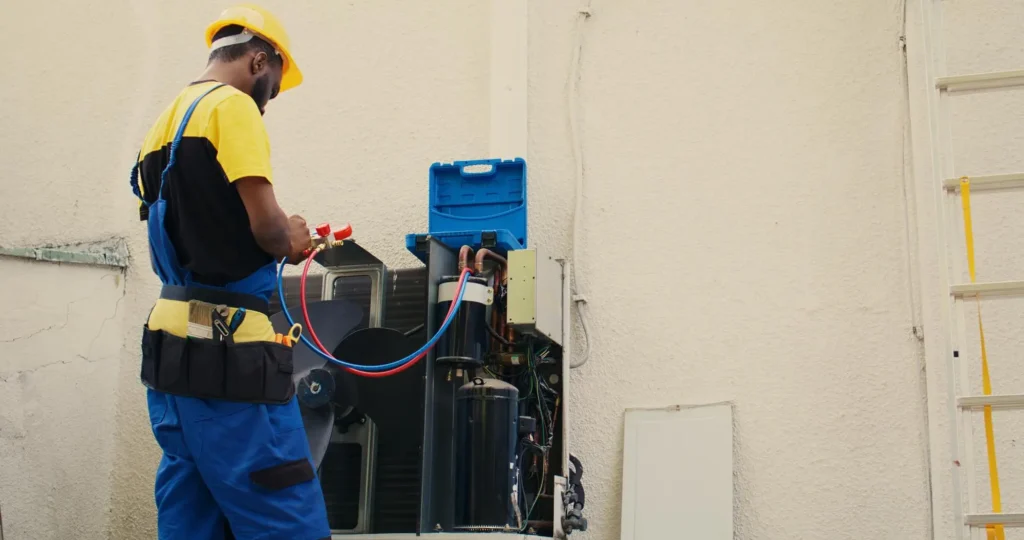
ICTESS’s VRV Installation Training Course is designed to train specialized technicians in the assembly and commissioning of variable refrigerant flow HVAC systems. The program covers the VRV/VRF technologies that dominate centralized HVAC in commercial, institutional, and high-end residential buildings.
You’ll learn the professional procedures applied on real job sites: basic layout of distribution networks, selection of indoor and outdoor units, installation of refrigerant lines with brazing and connections, equivalent length calculations, deep vacuum procedures using a rotary vane pump, additional refrigerant charging per manufacturer tables, and start-up protocols with parameter verification. The course includes a Capstone Project where you’ll apply everything you’ve learned to a complete VRV installation.
VRV/VRF systems are currently the dominant technology in commercial-building HVAC because of their energy efficiency and versatility. The industry needs installation technicians who can correctly execute these complex systems, where errors in refrigerant lines or in vacuum and charging procedures compromise the performance and lifespan of high-value equipment.
The purpose of this course is to train professionals capable of carrying out complete VRV installations following manufacturer technical standards. You’ll learn to read refrigerant schematics, route piping while respecting maximum lengths and allowable elevation differences, perform brazing and flare connections to a professional standard, apply deep vacuum procedures, calculate and perform additional refrigerant charging, and complete start-up while verifying every operating parameter.
The training also covers trade-specific tools (digital manifold, vacuum pump, leak detector, charging scale) and culminates in a Capstone Project where you’ll develop complete technical documentation for a VRV installation, applying every skill gained across the technical modules.
The VRV Installation Training Course qualifies you for specialized roles at HVAC installation companies, manufacturer-authorized service centers, maintenance firms serving commercial buildings, and facilities departments at large corporations. You can work as a VRV/VRF installation technician, specialized refrigeration technician, start-up technician, or installation crew lead.
The training prepares you to run complete installations from equipment receiving through customer handoff: reading project drawings and refrigerant schematics, laying out piping routes on site, mounting indoor and outdoor units to spec, running refrigerant lines with professional-quality brazing and connections, performing vacuum and charging procedures per code, and completing start-up with full parameter verification.
You’ll also build skills to diagnose basic installation issues, document completed work, prepare the required compliance documentation, and communicate effectively with site supervisors and engineering firms. The hands-on approach lets you apply this knowledge immediately on real job sites.
Study from anywhere with no commuting required. Balance your technical specialization with your current job.
Organize your study time around your own schedule. Move through the modules whenever works best for you and reinforce whatever you need.
Learn the official technical protocols from Daikin, Mitsubishi, LG, and Toshiba for VRV/VRF installation and start-up.
Technical video lessons, downloadable schematics, up-to-date manufacturer manuals, and hands-on calculation and design exercises.
With ICTESS, you’ll get specialized technical training focused on professional practice and designed to help you master the installation procedures VRV/VRF manufacturers require. Learn with an up-to-date methodology and real-world technical documentation from the industry.
What you'll achieve
Design the basic layout of VRV/VRF installations, applying criteria for maximum lengths, allowable elevation differences, and branch box selection per manufacturer manuals.
Install indoor and outdoor units correctly, maintaining required service clearances, mountings, and electrical connections per manufacturer specifications.
Run refrigerant lines using brazing and flare connections, applying professional techniques that ensure a leak-tight, clean interior circuit.
Apply deep vacuum procedures with a rotary vane pump and digital vacuum gauge verification, ensuring removal of moisture and non-condensables.
Complete initial start-up by verifying operating parameters, unit addressing, and basic control system configuration.
VRV/VRF systems have become the preferred HVAC technology for commercial buildings across the United States. Their energy efficiency, design flexibility, and ability to manage independent zones make them the standard solution for offices, hotels, hospitals, and shopping centers. This market dominance drives sustained demand for specialized installation technicians who can correctly execute these complex systems.
Shortage of qualified VRV installers: The job market shows a significant shortage of refrigeration technicians with specific training in variable-flow systems. Many installation companies report difficulty finding professionals who master the specific procedures these installations require, especially around pipe lengths, deep vacuum, and start-up.
Critical consequences of poor installations: Errors in VRV system installation put high-value equipment at risk and lead to costly claims. Issues like residual moisture in the circuit, poor brazing, or incorrect configuration cause premature failures and lost efficiency. Companies need trained technicians who can guarantee trouble-free installations.
Competitive edge in the job market: Specializing in VRV/VRF installation sets you apart significantly from generalist refrigeration technicians. Mastering these systems’ specific procedures, understanding the particularities of leading manufacturers, and handling technical documentation positions you as a top candidate at specialized installation companies.
Completing the VRV Installation Training Course positions you within a highly specialized segment of the HVAC industry. VRV/VRF systems dominate the commercial building market, and installing them requires qualified technicians who master procedures very different from those used with conventional equipment.
Access to larger, better-paid projects: VRV projects typically involve office buildings, hotels, hospitals, and shopping centers, where budgets and conditions exceed those of residential jobs. Specializing gets you into this market with better professional conditions.
Mastery of critical technical procedures: Handling vacuum, charging, and start-up correctly is decisive in VRV systems given the equipment’s high value and poor installation consequences. This sets you apart from generalist installers and positions you as a trusted professional.
Versatility across manufacturers: While each brand has its particularities, the technical principles are common to all VRV/VRF systems. The training prepares you to work with Daikin, Mitsubishi, LG, Toshiba, Samsung, and other brands, broadening your job opportunities.
Recognized professional certificate: The ICTESS Professional Certificate validates your specialized training in VRV/VRF installation, strengthening your standing in hiring processes and confirming your competencies to employers.
This course is designed for HVAC and refrigeration professionals looking to specialize in installing VRV/VRF systems, the dominant technology in commercial buildings. Recommended profiles include:
Program details

The Capstone Project is the culmination of the program and represents the practical integration of every technical skill built throughout the course. It consists of producing complete technical documentation for a VRV installation, from basic design through the start-up protocol, applying the professional procedures and technical criteria manufacturers require.
The project covers a VRV/VRF installation for a representative commercial building, where you’ll design the system by selecting units based on thermal loads, route refrigerant lines within maximum lengths and allowable elevation differences, size the branch boxes, specify the required materials and accessories, develop the installation procedure with a work sequence, calculate the additional refrigerant charge based on pipe length, and prepare the start-up protocol with parameter verification.
The project also includes the installation’s refrigerant schematic, a materials list with technical specifications, a start-up report with reference values, and IMC-compliant documentation for the AHJ permit submittal package. The final deliverable must be presented at the technical level and professional format expected of HVAC installation project records, demonstrating your ability to produce complete technical documentation suitable for real projects in the industry.

ICTESS’s VRV Installation Training Course covers the proper use of tools specific to refrigeration system installation: a digital manifold for measuring pressures and temperatures, a rotary vane vacuum pump verified with a high-precision digital vacuum gauge, an electronic scale for refrigerant charging, electronic and foam-based leak detection, oxy-acetylene brazing equipment for copper piping, and flaring and swaging tools. You’ll learn the correct procedures per VRV manufacturer specifications, including basic instrument calibration and preventive equipment maintenance. Mastering these tools is essential to producing professional-quality installations.
Basic HVAC and refrigeration knowledge is recommended, since the course focuses specifically on VRV/VRF installation procedures and doesn’t cover the theoretical fundamentals of the refrigeration cycle. The ideal candidate already works in HVAC with conventional equipment (splits, multi-splits, rooftop units) and wants to specialize in variable-flow systems. It’s also a good fit for graduates of HVAC technical training programs who have the theory but want hands-on specialization. If you have no prior industry experience, we recommend completing a foundational refrigeration course before taking this specialized program.
The ICTESS Professional Certificate validates your specialized technical training in VRV/VRF installation and is recognized by employers as high-level supplementary training. To legally work as an HVAC installer in the United States, you’ll also need the applicable state HVAC contractor license and, to handle refrigerants, EPA Section 608 certification. This course gives you the specific VRV technical competencies that general licensing programs typically don’t cover in depth, complementing your professional credentials with hands-on specialization that installation companies value highly.
The VRV Installation Training Course stands out for its exclusive focus on variable refrigerant flow systems, the technology that dominates the commercial HVAC market. While general courses cover multiple technologies at a surface level, this program goes deep into the specific technical procedures of VRV/VRF systems: calculating equivalent lengths with branch boxes, maximum elevation differences between units, deep vacuum procedures with specific timing and verification steps, calculating additional charge per manufacturer, and start-up protocols with addressing and configuration. The content covers the technical specifications of leading manufacturers (Daikin, Mitsubishi, LG, Toshiba), so you’ll understand each brand’s particularities and be able to work with any of them in the professional market.