
Fully online technical training designed around real industry demand, so you can specialize at your own pace.
10/31/2026
Start Date
2 months
Duration
100
Total Hours
6 Modules
Program
Duration
Total Hours
Program
Start Date
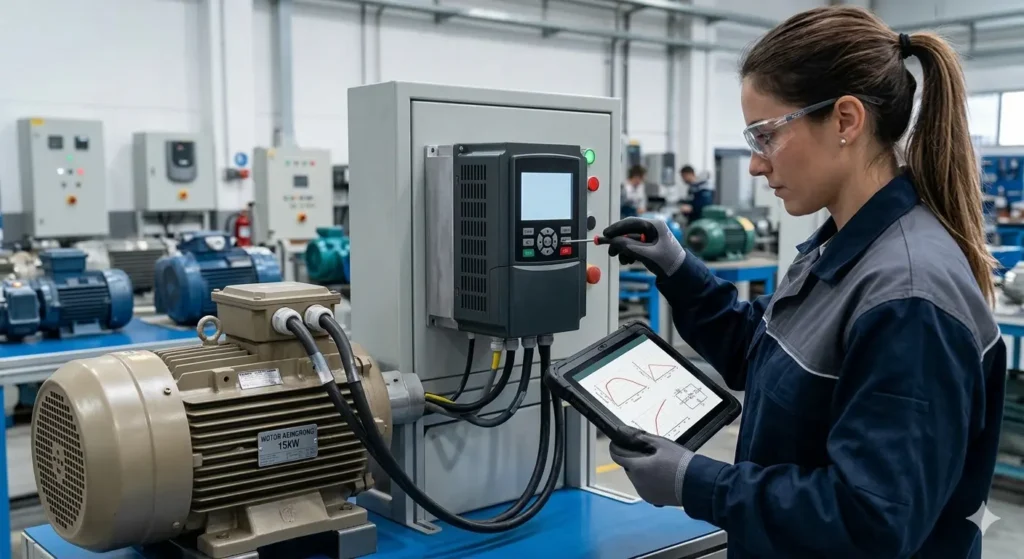
ICTESS’s Variable Frequency Drives and Motor Starting Training Course is designed to train specialists in the control, configuration, and maintenance of industrial electric drive systems. The program covers the fundamental technologies for speed regulation in induction motors and the different motor starting methods used in industrial installations.
You’ll learn the technical criteria for selecting VFDs based on motor characteristics and the application, interpreting torque-speed curves, configuring acceleration and deceleration ramps, designing installations that meet electromagnetic compatibility (EMC) requirements, and parameterizing advanced control functions such as PID loops and V/f modes. The course includes a capstone project where you’ll apply everything you’ve learned to a complete VFD-based automation project.
The Variable Frequency Drives and Motor Starting Training Course responds to growing demand for professionals who can implement speed control solutions in industrial environments. Modern industry needs technicians who can handle VFD selection and sizing, parameter configuration, EMC compliance, and troubleshooting in drive systems.
The course’s purpose is to train professionals who can design and implement complete electric motor control systems. You’ll learn to interpret VFD and motor specifications, calculate torque and speed requirements for the application, design wiring that meets electromagnetic compatibility criteria, configure control functions such as PID loops for process regulation, and establish preventive and corrective maintenance protocols.
The training includes hands-on work with parameterization software from the sector’s leading manufacturers (Siemens, ABB, Schneider Electric, Danfoss) and culminates in a capstone project where you’ll develop a complete automation project applying every skill acquired across the technical modules.
The Variable Frequency Drives and Motor Starting Training Course prepares you for specialized technical roles at industrial automation companies, machine builders, systems integrators, and industrial plant maintenance departments. You can work as an automation technician, a VFD programmer, an electric drives specialist, or a motor control maintenance lead.
The training prepares you to manage complete VFD implementation projects: running application studies to determine torque and speed requirements, selecting equipment based on technical and economic criteria, designing installations with EMC filters and shielded cabling, parameterizing advanced control functions, and establishing predictive maintenance routines.
You’ll also build the skills to diagnose common faults in drives and motors, interpret error codes across different manufacturers, optimize energy consumption through parameter tuning, and propose efficiency improvements in existing installations.
Study from anywhere with no commuting required. Balance your technical specialization with your current professional career.
Organize your study schedule around your own availability. Move through modules at the pace that works best for you and revisit anything you need extra practice with.
Learn with configuration tools from Siemens, ABB, Schneider Electric, and Danfoss, used on real industrial installations.
Technical video lessons, up-to-date downloadable materials, forums with specialized instructors, and hands-on configuration exercises.
With ICTESS, you’ll get specialized technical training focused on professional practice and designed to help you master the skills the industrial automation sector demands. Learn with an up-to-date methodology and real parameterization tools.
What you'll achieve
Select VFDs and induction motors based on technical criteria for torque, speed, duty cycle, and the environmental conditions of the industrial application.
Interpret and configure torque-speed curves, acceleration and deceleration ramps, and current limits to optimize the drive’s dynamic behavior.
Design installations that meet electromagnetic compatibility (EMC) requirements, selecting filters, line reactors, and shielded cabling techniques under applicable standards.
Parameterize advanced control functions such as PID loops, V/f modes, vector control, and regenerative braking on VFDs from different industrial manufacturers.
Diagnose common drive system faults, interpret error codes, and establish preventive and predictive maintenance routines for VFDs.
The industrial sector is undergoing a rapid shift toward energy efficiency and advanced automation. Variable frequency drives have become essential components in nearly every application involving electric motors, from HVAC and pumping systems to automated production lines. Electric motors are widely estimated to account for the majority of industrial electricity consumption, which makes optimizing them through VFDs a strategic priority.
A Shortage of Drive Specialists: The job market faces a significant shortage of professionals who can select, install, parameterize, and maintain VFD systems. Industrial and automation companies report difficulty filling technical roles that require specific knowledge of motor control and electromagnetic compatibility.
Increasingly Demanding EMC Requirements: Industrial installations must meet strict electromagnetic compatibility requirements under FCC regulations and IEC 61800-3 guidelines, which calls for professionals trained in filtering techniques, shielded cabling, and grounding. Failing to meet these requirements can lead to certification rejections and operational problems on the plant floor.
A Competitive Edge in the Job Market: Specialized training in variable frequency drives sets you apart significantly from generalist profiles. Mastering parameterization across multiple manufacturers, fault diagnostics, and predictive maintenance techniques positions you as a top candidate at industrial automation companies.
Completing the Variable Frequency Drives and Motor Starting Training Course positions you in an industrial sector with strong demand for technicians specialized in drive control. Automation and energy efficiency initiatives are driving widespread VFD adoption across every type of industrial application, from pumping and ventilation to production lines and specialized machinery.
Access to Specialized Technical Roles: You can pursue positions such as automation technician, electric drives specialist, VFD programmer, or industrial maintenance lead, roles that reflect the technical specialization this field requires. Mastering VFDs from multiple manufacturers significantly broadens your job opportunities.
Mastery of Parameterization Tools: Proficiency with configuration software from Siemens, ABB, Schneider Electric, and Danfoss sets you apart in the hiring process, since these are the standard platforms in industrial automation projects and are highly valued by integrators and machine builders.
Ability to Solve Complex Problems: You’ll build the skills to diagnose faults, interpret error codes, and optimize existing installations, letting you deliver immediate value in maintenance departments and reduce downtime on production lines.
Recognized Professional Certificate: The ICTESS professional certificate validates your technical specialization in variable frequency drives and motor starting, strengthening your position in the industrial job market.
This course is designed for professionals and technicians looking to specialize in controlling industrial electric drives using variable frequency drives. Recommended profiles include:
Program details

The capstone project is the culminating stage of the program and represents the practical integration of every technical skill developed throughout the course. It involves developing a complete VFD-based automation project, from application analysis through a maintenance proposal, applying the professional methods and parameterization tools used across the industrial sector.
The project addresses a real industrial application where you’ll study torque and speed requirements, select the appropriate VFD and motor based on technical and economic criteria, design the electrical installation to meet electromagnetic compatibility criteria, select filters and reactors under applicable standards, prepare the shielded cabling diagram, and parameterize the control functions the application requires (ramps, limits, PID where applicable).
The project also includes configuring protections and alarms, designing a preventive maintenance strategy with diagnostic indicators, and preparing the project’s technical documentation. The final documentation must be presented with the technical depth and professional format automation project reports require, demonstrating your ability to produce complete, rigorous technical documentation suitable for presentation to industrial clients or integration into larger engineering projects.
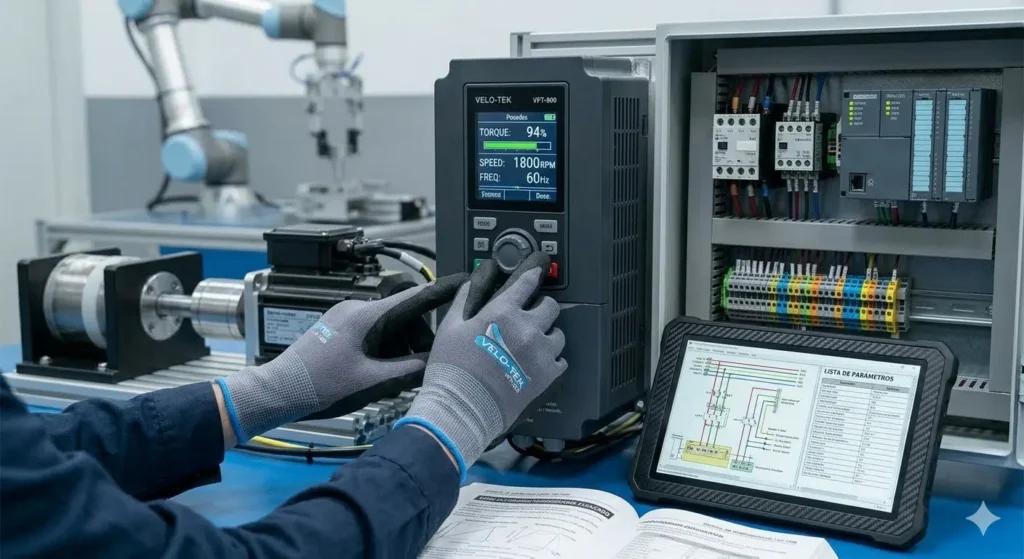
ICTESS’s Variable Frequency Drives and Motor Starting Training Course includes hands-on training with configuration tools from the sector’s leading manufacturers: Siemens STARTER for SINAMICS drives, ABB Drive Composer for the ACS range, Schneider Electric’s SoMove for Altivar drives, and Danfoss MyDrive. You’ll learn to use these platforms through real industrial case studies, mastering everything from initial parameter setup to advanced functions such as PID loops, current limits, and fault diagnostics. Proficiency with software from multiple manufacturers is highly valued in the industry, since automation companies and integrators routinely work with equipment from different brands depending on each project’s requirements.
An engineering degree isn’t required to take the course. The program is designed for both electrical technicians and industrial installers as well as engineers looking for practical specialization. A background in industrial electricity, reading electrical schematics, and basic knowledge of three-phase induction motors is recommended. Maintenance technicians with hands-on industrial experience will find the content directly applicable to their daily work. The course includes theoretical fundamentals on how VFDs and motors operate, but focuses especially on the practical aspects of selection, installation, parameterization, and fault diagnosis, which require a technical foundation in electricity.
The ICTESS professional certificate validates your technical specialization in variable frequency drives and motor starting and is recognized by companies in the automation sector as high-level, practice-oriented supplementary training. The certificate documents specific, in-demand technical skills: selecting VFDs based on application criteria, designing installations that meet EMC requirements, parameterizing advanced control functions, and diagnosing faults in drive systems. Many integrators, machine builders, and industrial maintenance departments especially value this hands-on training, since it demonstrates up-to-date knowledge across multiple manufacturers and the ability to solve real problems on industrial installations.
This Variable Frequency Drives and Motor Starting Training Course stands out for its multi-manufacturer approach and its technical depth in real-world applications. While many courses focus on a single manufacturer or stick to general theory, this program covers hands-on parameterization of Siemens, ABB, Schneider Electric, and Danfoss drives, some of the most widely used brands in industrial settings worldwide. The content includes technical aspects often skipped in basic training: designing installations that meet electromagnetic compatibility requirements, selecting filters and reactors, shielded cabling techniques, and advanced fault diagnosis with manufacturer-specific error code interpretation. The course also culminates in a complete hands-on project that ties every skill together.