Access to specialized technical roles: You’ll qualify for roles like HVAC project engineer, mechanical systems lead, energy consultant, or commissioning technician. Specializing in integrated, high-efficiency systems widens your career options.

Fully online technical training designed around real industry demand, so you can specialize at your own pace.
11/14/2026
Start Date
12 months
Duration
1500
Total Hours
12 Modules
Program
Duration
Total Hours
Program
Start Date
$5840
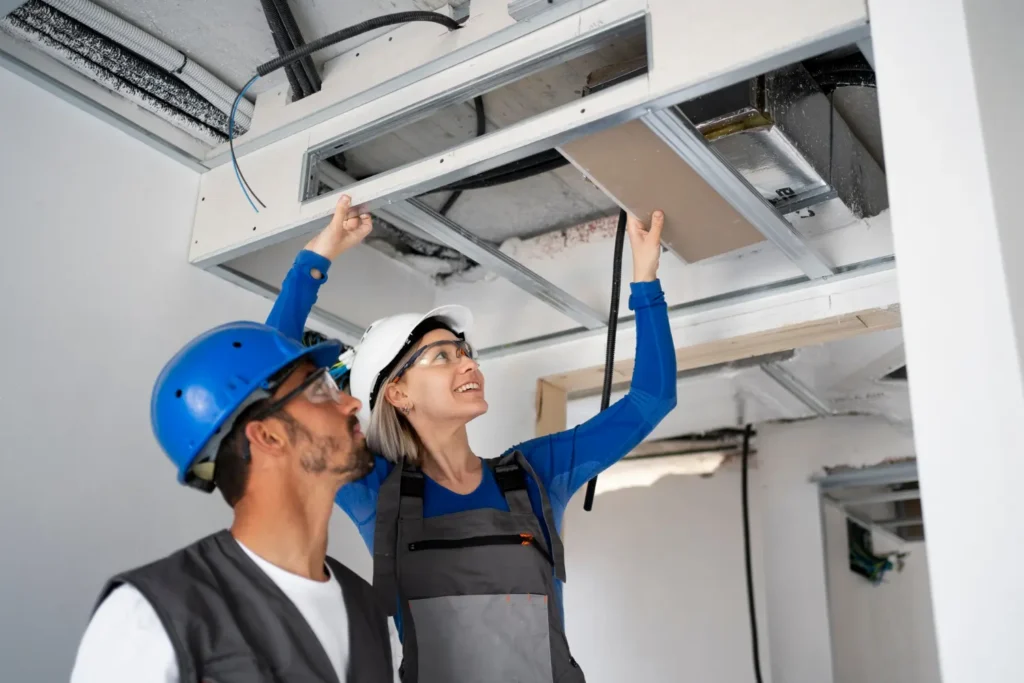
ICTESS’s Integrated HVAC Systems Design Professional Certificate trains specialists in the calculation, design and management of heating, ventilation, air conditioning and refrigeration systems in complex buildings. The program covers the industry’s most advanced technologies: VRF systems, chillers, air-source heat pumps, ductwork and hydronic distribution, and energy efficiency strategies with heat recovery.
You will learn the engineering calculations applied on real projects: ASHRAE load calculation methods, equipment sizing with technical and economic selection criteria, hydronic balancing, advanced psychrometric analysis, and energy modeling with professional software such as HAP, TRACE and DesignBuilder. The program ends with a Capstone Project, where you apply everything you have learned to a complete HVAC design.
The Integrated HVAC Systems Design Professional Certificate meets the growing demand for technical specialists who can design efficient, sustainable HVAC systems. The building industry needs professionals who master load calculations, indoor air quality standards (ASHRAE 62.1 and 62.2), high-efficiency technologies and integration with intelligent building management systems.
The program prepares you to lead complete HVAC and refrigeration projects. You will learn to size systems with recognized methods, select equipment on energy efficiency criteria, design balanced distribution networks, implement heat recovery strategies, and manage integration with BMS platforms for advanced monitoring and control.
You will work hands-on with the professional software engineering firms use (HAP, TRACE, DesignBuilder). The program ends with a Capstone Project, where you develop a complete project using all the skills from the technical modules.
The Integrated HVAC Systems Design Professional Certificate prepares you for specialized technical roles at MEP engineering firms, HVAC contractors, energy efficiency consultancies, and the technical departments of general contractors and real estate developers. You could work as an HVAC project engineer, technical lead for mechanical systems, building energy efficiency consultant, or commissioning and startup technician.
You will learn to manage projects from design through performance verification: running load calculations for complex buildings, sizing VRF systems and chillers to the IMC, IECC and ASHRAE 90.1, preparing technical reports and permit submittal packages for the AHJ, designing ductwork and piping with hydronic balancing, and overseeing commissioning.
You will also be able to audit existing systems, propose energy efficiency improvements, design BMS integration strategies, and apply condition-based maintenance techniques. The hands-on approach lets you apply what you learn to real projects right away.
Study from anywhere with no commute. Balance your technical specialization with your current job.
Plan your study around your own schedule. Move through the modules when it suits you and review whatever you need.
Learn HAP, TRACE and DesignBuilder, the same simulation tools engineering firms use on real projects.
Technical video lessons, up-to-date downloadable materials, forums with specialized tutors, and hands-on exercises.
With ICTESS you get specialized technical training focused on professional practice and built so you master the skills demanded in HVAC and building energy efficiency. Learn with up-to-date methods and real engineering tools.
What you'll achieve
Calculate heating and cooling loads in complex buildings using professional ASHRAE methods and applicable codes to size efficient HVAC systems.
Design and select VRF systems, chillers and air-source heat pumps, evaluating technical, economic and energy efficiency criteria for each building type.
Size ductwork and hydronic distribution networks, applying hydronic balancing techniques, diffuser selection and pressure drop calculations.
Integrate HVAC systems with BMS using BACnet and Modbus protocols, and configure cloud platforms for advanced monitoring and control.
Execute commissioning, performance verification and condition-based maintenance using data analytics and energy simulation software.
HVAC and building energy efficiency are changing fast, driven by decarbonization goals and stricter codes. The IECC, ASHRAE 90.1 and state and local building performance standards require high-performance systems with heat recovery, renewable integration and verified indoor air quality, which creates steady demand for specialized HVAC engineers.
Shortage of qualified technical specialists: Employers struggle to find professionals who can design integrated systems that combine efficient HVAC, controlled ventilation and intelligent BMS management. Companies report difficulty filling specialized technical roles, especially those requiring energy simulation and high-efficiency technologies.
Growing demand for multidisciplinary skills: Today’s projects call for versatile professionals who can integrate VRF systems with air-source heat pumps, heat recovery, optimized distribution networks and cloud-based controls. Engineering firms and general contractors increasingly value the ability to design code-compliant, high-efficiency solutions.
Competitive edge in the job market: Specialized training in integrated HVAC systems engineering sets you apart from generalist profiles. Mastering specific technical calculations, simulation software, applicable codes and commissioning methods makes you a priority candidate at leading companies.
Completing the Integrated HVAC Systems Design Professional Certificate positions you in a field with strong demand for technical specialists. Stricter energy codes and indoor air quality requirements are creating a steady need for qualified professionals at engineering firms, contractors and specialized consultancies.
Access to specialized technical roles: You’ll qualify for roles like HVAC project engineer, mechanical systems lead, energy consultant, or commissioning technician. Specializing in integrated, high-efficiency systems widens your career options.
Command of professional tools: Hands-on proficiency in HAP, TRACE, and DesignBuilder sets you apart in hiring, as these tools are essential at MEP firms and employers value candidates productive from day one.
Ability to lead complete projects: You’ll build skills to manage every HVAC project phase, from load calculations to commissioning and verification, so you can take on greater responsibility on complex projects.
Recognized professional certificate: The ICTESS certificate backs your specialization in integrated HVAC systems, strengthening your job market position and validating your skills with HVAC and energy efficiency companies.
This program is designed for professionals and graduates who want to specialize in the design, sizing and management of HVAC and refrigeration projects in buildings. Recommended profiles include:
Program details

The Capstone Project is the culminating stage of the program and brings together all the technical skills you develop. It involves the complete development of a real HVAC engineering project, from load calculations through the commissioning and maintenance proposal, using the professional methods and simulation tools the industry relies on.
The project can focus on any building type covered in the program: residential, commercial, retail or industrial. You will run the building’s load calculations with simulation software, size and select HVAC equipment (VRF, chillers, air-source heat pumps) on technical and economic criteria, design ductwork and hydronic networks with pressure drop and balancing calculations, and prepare the flow diagrams and technical drawings.
The project also covers the energy efficiency strategy with heat recovery, the BMS integration proposal using standard protocols, the commissioning and performance verification plan, and the condition-based maintenance strategy. The final deliverable must meet the technical standard and professional format of a permit submittal package, showing that you can produce complete documentation ready for the AHJ or for industry clients.

ICTESS’s Integrated HVAC Systems Design Professional Certificate includes hands-on training with three industry-standard tools: Carrier’s HAP (Hourly Analysis Program) for load calculations and equipment selection, Trane’s TRACE 700 for energy analysis and system modeling, and DesignBuilder for dynamic building thermal simulation with the EnergyPlus engine. You will work with these platforms on real case studies, from entering construction and weather data to generating professional technical reports. Specialized HVAC engineering firms place high value on proficiency in these programs when hiring, because they use them to develop construction documents and demonstrate code compliance to the AHJ.
An engineering degree is not required, but an associate degree or advanced technical training in energy, mechanical, electrical or construction is recommended. The program is designed for industrial, mechanical, energy and building engineers, and it is also open to construction managers and professionals with a solid technical background in building systems. HVAC technicians with proven professional experience may also enroll if they have prior knowledge of thermodynamics, electricity and reading technical drawings. The program includes advanced heat transfer, psychrometrics and network sizing calculations, so you will need to be comfortable with math, read technical drawings and work with energy simulation software.
The ICTESS Professional Certificate backs your technical specialization in integrated HVAC systems and is valued by HVAC industry employers as high-level professional development. Although it is not an accredited academic degree, the certificate documents specific, in-demand skills: load calculations with recognized methods, VRF and chiller sizing, distribution network design, BMS integration and industry software. Many engineering firms, HVAC contractors and energy efficiency consultancies value this hands-on training as a complement to a bachelor’s degree, because it shows up-to-date knowledge of codes and standards such as the IMC and ASHRAE, command of real industry tools, and practical project experience gained during the program.
The Integrated HVAC Systems Design Professional Certificate stands out for its comprehensive approach and technical depth across every project phase. While many courses focus on individual topics such as load calculations or equipment selection, this program covers the full cycle: from advanced heat transfer and psychrometrics to commissioning, performance verification and condition-based maintenance. The content includes current technologies such as the latest VRF systems, air-source heat pumps and, above all, BMS integration with BACnet and Modbus, a critical topic in smart buildings that conventional programs rarely address. The program also includes hands-on training with specialized industry software (HAP, TRACE, DesignBuilder), tools that general courses do not offer and that are essential at specialized engineering firms.