
Fully online technical training designed around real industry demand, so you can specialize at your own pace.
11/07/2026
Start Date
6 months
Duration
750
Total Hours
8 Modules
Program
Duration
Total Hours
Program
Start Date
$3720
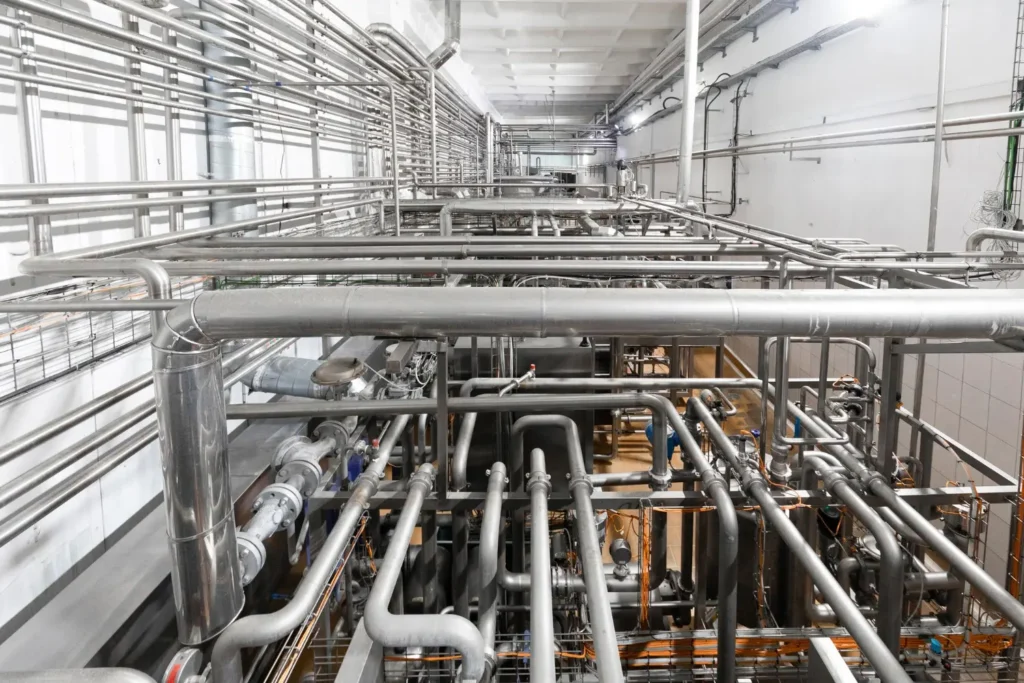
ICTESS’s Industrial Piping Design Specialization is designed to train specialists in the calculation, design and technical documentation of piping systems for industrial plants. The program covers everything from material and fitting selection to isometric drawings and the application of the ASME B31 piping codes.
You will learn the technical fundamentals piping engineers use on real projects: reading and developing P&IDs, thermal expansion stress calculations, pipe support design, welded and flanged joint specification, and pressure testing and radiographic examination procedures. The program includes a Capstone Project in which you will apply everything you have learned to the complete design of an industrial piping system.
Industry needs professionals who can design piping systems that carry process fluids safely and efficiently. Petrochemical plants, refineries, pharmaceutical and food facilities need specialists who master mechanical stress calculations, the applicable codes and material selection criteria based on service conditions.
The purpose of the program is to train professionals who can deliver complete piping projects from conceptual design to construction documents. You will learn to read process flow diagrams, size lines based on flow and pressure drop, calculate thermal expansion, design support systems, specify joints to process requirements, and produce isometric drawings for shop fabrication.
The training includes hands-on work with professional software used by engineering firms (AutoCAD Plant 3D, CAESAR II) and culminates in a Capstone Project in which you will develop the complete design of an industrial piping system under ASME B31.
The Industrial Piping Design Specialization qualifies you for specialized technical roles at EPC firms, refineries, petrochemical plants, process industries and industrial construction contractors. You will be able to work as a piping designer, junior piping engineer, specialized CAD drafter, or fabrication and installation supervisor for industrial piping systems.
The program prepares you to take part in complete projects from basic engineering to construction: reading process specifications and P&IDs, sizing lines to operating conditions, producing fabrication isometrics, specifying materials and fittings by pressure class, and verifying that the designed systems meet code requirements.
You will also build the skills to perform flexibility analysis, design support systems for static and dynamic loads, specify welding procedures and nondestructive examination, and oversee hydrostatic acceptance tests. The hands-on approach lets you apply what you learn right away on real industrial projects.
Study from anywhere, with no commuting. Balance your technical specialization with your current job.
Plan your study around your schedule. Move through the modules whenever it suits you and review what you need.
Learn AutoCAD Plant 3D and CAESAR II, the same design and analysis tools EPC firms use.
Technical video lessons, up-to-date downloadable materials, forums with specialized instructors and hands-on design exercises.
With ICTESS, you get specialized technical training focused on professional practice and designed to help you master the skills the industrial facilities sector demands. Learn with an up-to-date methodology and real piping engineering tools.
What you'll achieve
Select pipe materials, fittings and pressure classes based on process conditions, chemical compatibility and ASME B31 code requirements.
Read and develop P&IDs, identifying process lines, instrumentation, valves and fittings using ISA symbology and industry standards.
Calculate mechanical stresses from thermal expansion, dead weight and occasional loads, designing pipe support systems that ensure structural integrity.
Develop detailed isometric drawings for shop fabrication, including dimensions, welding specifications, fittings and bill of materials.
Specify welded and flanged joint procedures, as well as hydrostatic testing and radiographic examination to the applicable inspection codes.
The industrial facilities sector stays consistently active with the construction, expansion and maintenance of process plants worldwide. Refineries, petrochemical plants and pharmaceutical facilities require continuous upgrades, and the energy transition is driving green hydrogen and renewable fuels projects that also need specialized piping design.
A shortage of qualified piping specialists: Employers report difficulty finding professionals trained specifically in industrial piping design. EPC firms struggle to fill piping designer roles that require command of ASME codes, stress analysis software and the ability to produce complete technical documentation for fabrication and installation.
Increasingly sought-after multidisciplinary skills: Today’s projects require professionals who combine knowledge of materials, fluid mechanics, strength of materials and technical codes. The ability to design complete systems accounting for expansion, supports, welds and acceptance testing is increasingly valued by engineering firms and industrial plants.
A competitive edge in the job market: Specialized training in piping design sets you apart from generalist profiles. Mastering flexibility calculations, the ASME B31 codes, professional software and isometric drafting makes you a top candidate at leading industrial companies.
Completing the Industrial Piping Design Specialization positions you in a sector with steady demand for technical specialists. Process industries, refineries, petrochemical plants and EPC firms need professionals who can design safe, efficient piping systems to recognized codes.
Access to specialized technical roles: You can apply for roles such as piping designer, piping engineer or fabrication supervisor. Expertise in ASME B31 codes expands your opportunities on domestic and international projects.
Command of professional tools: Hands-on experience with software such as AutoCAD Plant 3D and CAESAR II sets you apart in hiring processes, since these are essential tools at EPC firms and highly valued by industrial and energy employers.
Ability to deliver complete projects: You will build the skills to take part in every phase of a piping project, from conceptual engineering to installation oversight, so you can take on greater responsibility and contribute to large-scale projects.
Professional certificate: The ICTESS professional certificate backs your technical specialization in industrial piping design, strengthening your position in the job market and validating your skills with industry employers.
This program is designed for professionals and graduates who want to specialize in the design, calculation and documentation of piping systems for industrial plants. Recommended profiles include:
Program details

The Capstone Project is the culminating stage of the program and brings together all the technical skills developed throughout the course. It consists of developing a complete industrial piping system project, from interpreting the process diagram to producing construction documents for fabrication and installation, using the professional methods and technical codes applied in the industry.
The project includes analyzing the starting P&ID, selecting materials and pressure classes to service conditions, routing lines to optimize runs and accessibility, calculating thermal expansion stresses with expansion loop or expansion joint design, sizing support systems, and producing detailed isometric drawings with bills of materials for prefabrication. You will also specify the joining procedures and required acceptance tests.
The project also includes verifying compliance with the ASME B31 codes, specifying hydrostatic testing and radiographic examination requirements where applicable, and preparing complete technical documentation. The final documentation must meet the technical level and professional format expected of engineering construction documents, demonstrating your ability to produce documentation that could be used to build real industrial systems.
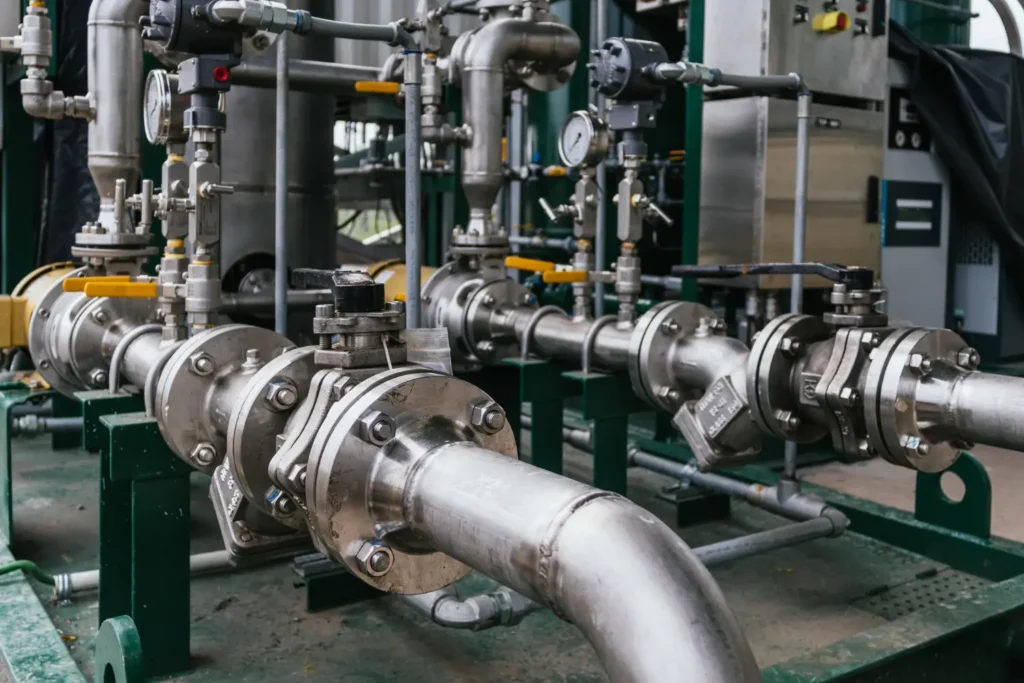
ICTESS’s Industrial Piping Design Specialization includes hands-on training with industry-standard tools: AutoCAD Plant 3D for 3D plant modeling and automatic isometric generation, and CAESAR II for flexibility analysis and pipe stress calculations. You will use these platforms on real industrial case studies, from routing lines to verifying allowable stresses under the applicable code. These programs are highly valued by EPC firms and petrochemical companies, since they are the tools used to develop piping construction documents for process plants.
An engineering degree is not required, but a technical background in mechanical, industrial systems or construction is recommended. The program is designed for mechanical, chemical and industrial engineers, and it is also accessible to CAD drafters, designers with engineering office experience, and maintenance technicians with process plant experience. Basic knowledge of technical drawing, reading drawings and mechanics of materials is essential. The program includes technical content with stress calculations and code application, so you should be comfortable with mathematical formulas and reading technical system drawings.
The ICTESS Professional Certificate validates your technical specialization in industrial piping design and is recognized by industry employers as advanced professional development. While it is not an accredited academic degree, the certificate documents in-demand technical skills: isometric drafting, thermal expansion stress calculations, application of the ASME B31 codes and professional software use. EPC firms, petrochemical plants and industrial contractors especially value this hands-on training as a complement to a base degree, since it shows up-to-date code knowledge and experience with real piping design methods.
The Industrial Piping Design Specialization stands out for its end-to-end approach and technical depth in the ASME piping codes. While many courses focus only on isometric drafting or partial topics, this program covers the full design cycle: from P&ID interpretation and material selection to stress calculations, support design, welding specification and test procedures. The content includes hands-on application of ASME B31.1 and B31.3, the codes that govern piping design for power and process plants. The program also includes training with AutoCAD Plant 3D and CAESAR II, professional tools rarely covered in basic courses and essential at specialized engineering firms.