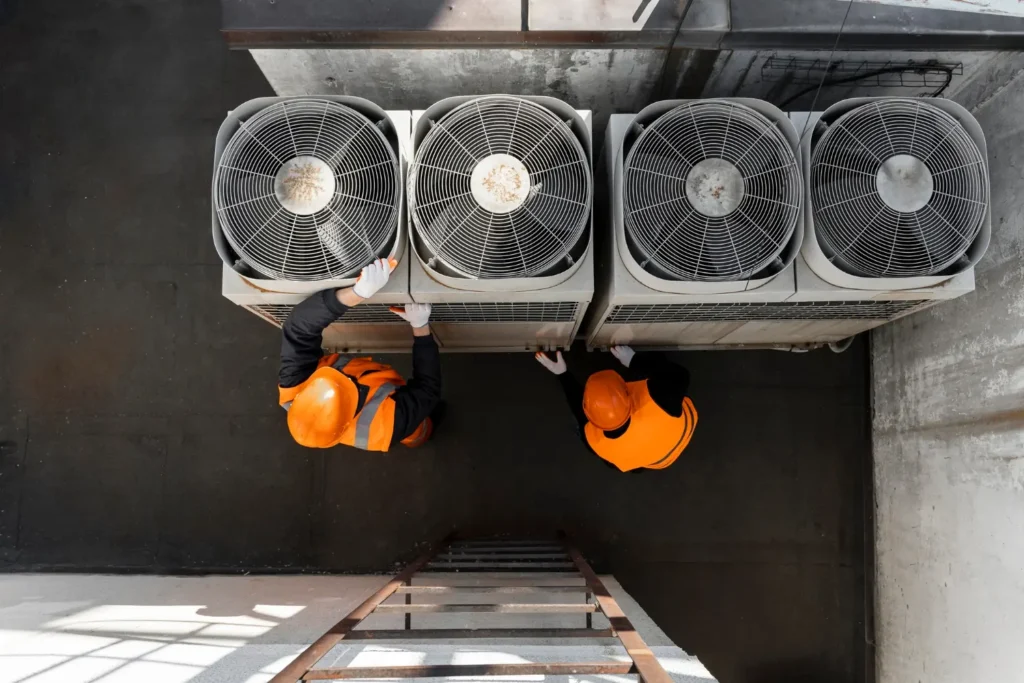
Certificate in Industrial and Process Refrigeration

Fully online technical training designed around real industry demand, so you can specialize at your own pace.

11/07/2026

Start Date

7 months

Duration

750

Total Hours

8 Modules

Program

7 months

Duration

750

Total Hours

8 Modules

Program

11/07/2026

Start Date

Certificate in Industrial and Process Refrigeration 1

Overview of the Certificate in Industrial and Process Refrigeration

ICTESS’s Certificate in Industrial and Process Refrigeration is designed to train specialists in the design, sizing, and operation of high-capacity refrigeration systems. The program covers the main industrial refrigeration architectures: direct expansion (DX) systems, flooded systems, and transcritical CO2 technology, covering applications in the food, pharmaceutical, chemical, and cold chain logistics industries.

You’ll learn the refrigeration engineering calculations used on real projects: process thermal balances, refrigerant selection under applicable EPA regulations, evaporator and condenser sizing, temperature and humidity control system design, and energy efficiency analysis with heat recovery. The certificate includes a Capstone Project where you’ll apply everything you’ve learned to the complete design of an industrial refrigeration plant.

Purpose of the Certificate in Industrial and Process Refrigeration

The Certificate in Industrial and Process Refrigeration meets growing demand for specialized technicians who can design and manage high-capacity refrigeration installations in industry. The sector needs professionals who master thermodynamic calculations and safety standards, plus criteria for selecting low-GWP refrigerants, especially as the EPA phases down high-GWP refrigerants under the AIM Act.

The certificate’s purpose is to train professionals who can lead complete refrigeration projects from thermal load analysis through commissioning and optimization. You’ll learn to perform thermal balances for industrial processes, select refrigeration architectures based on application, size critical components such as evaporators and condensers, implement precise temperature and humidity control systems, and design waste heat recovery strategies.

The training includes hands-on work with professional technical software used at engineering firms in the field (CoolPack, Bitzer Software, and Solkane) and culminates in a Capstone Project where you’ll develop the complete design of an industrial refrigeration plant, applying every skill gained in the technical modules.

What the Certificate in Industrial and Process Refrigeration prepares you for

The Certificate in Industrial and Process Refrigeration qualifies you for specialized technical roles at refrigeration engineering firms, refrigeration equipment manufacturers, food and pharmaceutical companies, and industrial maintenance firms. You can work as a refrigeration projects technician, industrial refrigeration lead, energy efficiency consultant, or operations and maintenance supervisor at refrigeration plants.

The training prepares you to manage complete projects from the study phase through operation: performing process thermal balances, sizing installations to applicable ASHRAE 15 and IIAR safety standards, producing technical equipment specifications, overseeing refrigeration installation work, and optimizing performance through analysis of operating parameters and energy consumption.

You’ll also build skills to audit existing installations, propose refrigerant retrofits to low-GWP alternatives, design heat recovery systems, and implement predictive maintenance strategies. The hands-on approach lets you apply what you learn directly to real projects in the industrial sector.

Reasons to Choose ICTESS

100% Online Training

Study from anywhere with no commute required. Balance your technical specialization with your current professional schedule.

Flexible, Personalized Pace

Organize your study around your own availability. Move through modules on your schedule and revisit whatever needs reinforcement.

Professional Industry Software

Learn CoolPack, Bitzer Software, and Solkane, the refrigeration calculation tools real engineering firms use.

Advanced Virtual Campus

Technical video lessons, up-to-date downloadable materials, forums with specialized tutors, and hands-on exercises.

With ICTESS, you’ll receive specialized technical training focused on professional practice and built to help you master the competencies the industrial refrigeration sector demands. Learn with up-to-date methodology and real refrigeration engineering tools.

What you'll achieve

Objectives of the Certificate in Industrial and Process Refrigeration

Curriculum

01Module 1: Thermal Balance in Industrial Processes
  • Product thermal loads: sensible heat, latent heat, and respiration in food products
  • Transmission, infiltration, and equipment loads per ASHRAE methodology
  • Refrigeration demand profiles: peak loads and standby capacity sizing
02Module 2: Refrigerant and Component Selection
  • Refrigerant thermodynamic properties: P-h diagrams, GWP, and ODP
  • EPA refrigerant regulations and safety standards: restrictions, timelines, and low-impact alternatives
  • Compressor, expansion valve, and line accessory selection
03Module 3: Architectures: DX, Flooded, and CO2 Systems
  • Direct expansion (DX) systems: commercial and light industrial applications
  • Flooded ammonia systems: pump recirculation and liquid separators
  • Transcritical and subcritical CO2 cycles: cascade and booster configurations
04Module 4: Evaporator and Condenser Design
  • Industrial evaporators: cubic, ceiling-mounted, and plate types for process applications
  • Evaporative, forced-air, and water-cooled condensers
  • Heat exchange surface calculation: LMTD, U-coefficients, and catalog-based selection
05Module 5: Humidity and Temperature Control
  • Temperature control systems: thermostats, PLCs, and PID loops
  • Relative humidity management: defrosting, humidification, and dehumidification
  • Capacity control: variable frequency drives and parallel compressor control
06Module 6: Efficiency and Heat Recovery
  • Refrigeration efficiency indicators: COP, EER, and SEER under real operating conditions
  • Heat recovery systems: desuperheaters and dual-purpose condensers
  • Energy optimization: free cooling, thermal storage, and demand management
07Module 7: Maintenance and Safety
  • Preventive and predictive maintenance: oil analysis, vibration monitoring, and pressure checks
  • ASHRAE 15 and IIAR safety standards: occupancy classification, detectors, and ventilation
  • Refrigerant charging, recovery, and leak management procedures
08Module 8: Capstone Project
  • Project development: process specifications and complete thermal balance
  • Architecture and refrigerant selection, and major component sizing
  • Technical documentation: P&ID diagrams, specifications, and maintenance plan

RENEWABLE ENERGY FACULTY

Train for a career the industry actually needs

Why the Certificate in Industrial and Process Refrigeration Matters

The industrial refrigeration sector is undergoing a deep transformation driven by tightening environmental regulation. The EPA’s HFC phasedown under the AIM Act is progressively eliminating high-GWP refrigerants, pushing industries to migrate toward alternatives such as CO2, ammonia, and low-charge refrigerants. This creates growing demand for technical professionals who can design and manage installations built on new refrigeration technologies.

Shortage of natural refrigerant specialists: the job market faces a significant shortage of qualified technicians who can work with transcritical CO2 systems, ammonia, and other low-impact alternatives. Companies in the field report difficulty finding professionals with specific training in these emerging technologies, especially for roles that require design and sizing skills.

Growing demand for multidisciplinary skills: today’s industrial refrigeration projects require integrated knowledge of thermodynamics, automatic control, energy efficiency, and safety standards. Technical specialization that combines system design, component selection, and heat recovery strategies is increasingly valued by food, pharmaceutical, and cold chain logistics companies.

Competitive edge in the job market: specialized training in industrial refrigeration sets you significantly apart from generalist HVAC profiles. Mastering specific thermodynamic calculations, ASHRAE 15/IIAR safety standards, professional software, and natural refrigerant technologies positions you as a top candidate at leading companies in the refrigeration industry.

Benefits of the Certificate in Industrial and Process Refrigeration

Completing the Certificate in Industrial and Process Refrigeration positions you in an industry with steady demand for technical specialists. The food, pharmaceutical, chemical, and cold chain logistics industries need qualified professionals to design, operate, and maintain efficient, safe refrigeration installations, especially amid the shift toward low-impact refrigerants.

Access to specialized technical roles: you can pursue positions such as refrigeration projects technician, industrial refrigeration lead, energy efficiency consultant, or O&M supervisor, highly valued in industries that critically depend on the cold chain. Specializing across multiple refrigeration architectures considerably broadens your job opportunities.

Command of professional tools: working with technical software such as CoolPack, Bitzer Software, and Solkane sets you apart in hiring processes, since these are essential tools for sizing refrigeration installations, and hands-on command of them is highly valued by manufacturers and engineering firms in the field.

Ability to lead the refrigerant transition: you’ll build skills to manage retrofit projects toward natural and low-GWP refrigerants, an urgent need as the EPA’s HFC phasedown transforms the entire industrial refrigeration sector.

Recognized professional certificate: the ICTESS Professional Certificate backs your technical specialization in industrial refrigeration, strengthening your position in the job market and validating your skills to companies in the refrigeration industry.

Who the Certificate in Industrial and Process Refrigeration Is For

This certificate is designed for professionals and technicians looking to specialize in the design, sizing, and management of industrial refrigeration installations. Recommended profiles include:

  • Mechanical, industrial, or energy engineers looking to specialize in the calculation and design of industrial refrigeration systems for food, pharmaceutical, and process applications.
  • Advanced refrigeration and HVAC technicians looking to move into project engineering, technical design, and supervision roles on larger-scale installations.
  • Technical managers at industrial plants in the food, pharmaceutical, or chemical sectors who need to master refrigeration fundamentals to optimize their installations and manage improvement projects.
  • HVAC professionals looking to expand their skills into industrial refrigeration, high-capacity systems, and forward-looking natural refrigerant technologies.
  • Refrigeration maintenance technicians with hands-on experience looking to gain design and sizing knowledge to take on higher-level technical responsibilities.

Program details

Logotipo-ICTESS-Dorado-1776x2048-1

Capstone Project for the Certificate in Industrial and Process Refrigeration

The Capstone Project is the culminating stage of the program and brings together every technical competency developed throughout the course. It involves the complete design of a real-world industrial refrigeration plant, from process requirements analysis through the operation and maintenance proposal, using the professional methodologies and calculation tools applied across the industry.

The project covers the complete design of a refrigeration installation for a specific industrial application: food, pharmaceutical, chemical, or logistics. You’ll perform the complete process thermal balance, select the most suitable refrigeration architecture (DX, flooded, or CO2), choose the refrigerant based on technical and regulatory criteria, size evaporators, condensers, and auxiliary components, design the temperature and humidity control system, and calculate energy consumption with heat recovery proposals.

The work also includes producing P&ID refrigeration diagrams, technical specifications for major equipment, an ASHRAE 15/IIAR compliance analysis, and planning the preventive maintenance strategy. The final documentation must meet the technical depth and professional format expected of permit-ready project reports, demonstrating your ability to produce complete, rigorous technical documentation suitable for submission to regulatory authorities or industrial clients.

Certificate in Industrial and Process Refrigeration 3
Common Questions

Frequently Asked Questions About the Certificate in Industrial and Process Refrigeration

ICTESS’s Certificate in Industrial and Process Refrigeration includes hands-on training with three standard technical tools in the field: CoolPack, Bitzer Software, and Solkane. CoolPack is used for thermodynamic calculations of refrigeration cycles and component analysis, Bitzer Software for compressor selection and sizing under real operating conditions, and Solkane for refrigerant property analysis and cycle optimization. You’ll learn to use these platforms through practical industrial case studies, mastering everything from thermal balance calculations to generating technical equipment specifications. Command of these programs is highly valued in hiring processes at refrigeration engineering firms and equipment manufacturers, since these are the tools they use to develop industrial refrigeration projects.

An engineering degree is not required, but technical training in refrigeration, HVAC, thermodynamics, or industrial installations is recommended. The certificate is designed for mechanical, industrial, and energy engineers, but it’s also accessible to advanced refrigeration and HVAC technicians, as well as HVAC professionals with demonstrable experience. Maintenance technicians with a background in industrial refrigeration installations can also enroll if they have prior knowledge of basic thermodynamics and reading technical schematics. The program includes advanced-level content with refrigeration calculations, so it’s essential to be comfortable working with mathematical formulas and interpreting P-h diagrams and installation schematics.

The ICTESS Professional Certificate validates your technical specialization in industrial refrigeration and is recognized by companies in the field as high-level supplementary training. While it isn’t a formal academic degree and doesn’t replace EPA Section 608 certification or a state contractor license, the certificate documents specific, highly demanded technical skills: industrial refrigeration system design, refrigerant selection under applicable EPA regulations, component sizing, and the ability to develop complete refrigeration plant projects. Many refrigeration engineering firms, equipment manufacturers, and food and pharmaceutical companies particularly value this technical training as a complement to a base degree, since it demonstrates up-to-date knowledge of emerging technologies such as transcritical CO2 and command of professional tools in the field.

This Certificate in Industrial and Process Refrigeration stands out for its focus on high-capacity industrial applications and its technical depth in refrigeration engineering calculations. While many courses focus on commercial refrigeration or offer general knowledge, this program deals specifically with industrial systems: direct expansion architectures for large loads, flooded ammonia systems, and next-generation transcritical CO2 technology. The content includes the real technical calculations engineers use on professional projects: thermal balances using ASHRAE methodology, evaporator and condenser sizing based on efficiency criteria, refrigerant selection under applicable EPA regulations, and heat recovery system design. The certificate also includes hands-on training with specific professional software (CoolPack, Bitzer Software, Solkane), tools not typically available in generalist courses.

Ready to start

Take the next step in your technical career