
Fully online technical training designed around real industry demand, so you can specialize at your own pace.
10/31/2026
Start Date
2 months
Duration
100
Total Hours
6 Modules
Program
Duration
Total Hours
Program
Start Date
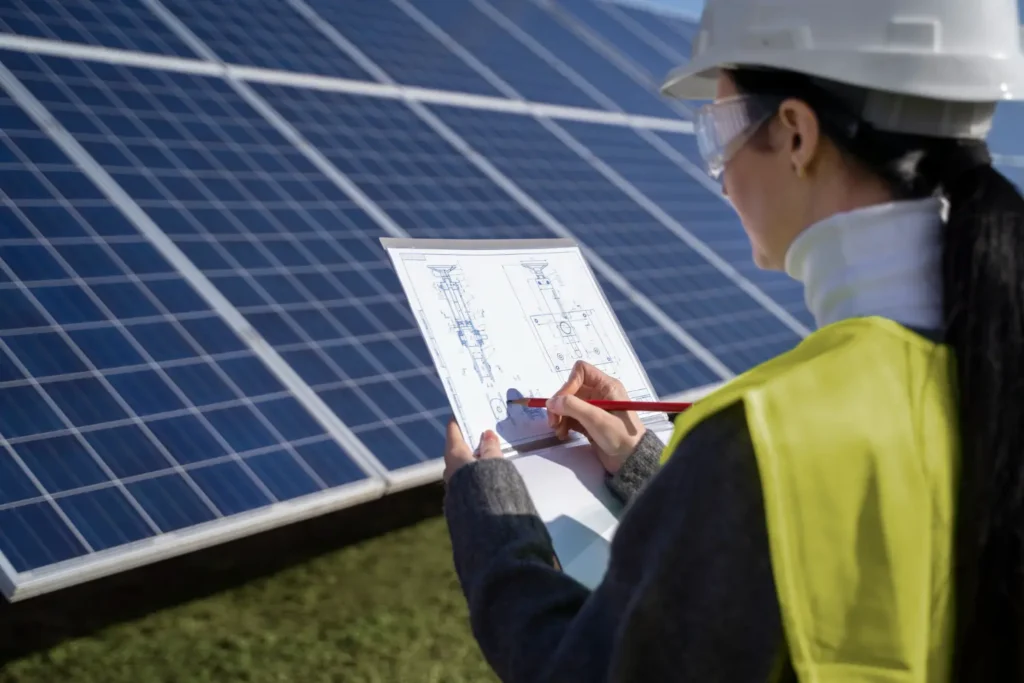
The Course in Residential Solar PV System Design from ICTESS is built to train specialists in the calculation, sizing, and commissioning of solar systems for single-family homes and residential buildings. The program covers the core technical aspects of behind-the-meter solar: from string configuration through equipment selection and code compliance.
You will learn the DC electrical calculations that determine the optimal module configuration, the technical selection of inverters by compatibility and performance criteria, the design of electrical protections (SPDs, fuses, circuit breakers, rapid shutdown), and the mounting solutions for rooftop structures. The course includes a Capstone Project in which you apply everything you have learned to the complete design of a residential solar installation.
The residential solar market is growing steadily, driven by falling equipment costs, federal and state tax incentives, and high electricity prices. That scenario generates constant demand for technicians able to design installations that comply with the applicable codes and optimize the energy performance of each home.
The purpose of the course is to train professionals capable of performing the complete technical sizing of residential solar installations: calculating string configurations within the inverter’s voltage window, selecting equipment on technical and economic criteria, designing the DC and AC protection panel, proposing rooftop attachment solutions suited to each roof type, and carrying out commissioning with the required code verifications.
The training includes the use of solar calculation tools for string sizing and production estimates, along with working knowledge of the monitoring platforms used to track installations once they are in service.
The Course in Residential Solar PV System Design qualifies you for technical roles at solar installation companies, solar equipment distributors, the technical departments of retail energy providers, and as a self-employed professional specialized in residential solar. You can work as a system designer, sizing technician, residential project lead, or commissioning and maintenance technician.
The program prepares you to manage complete residential projects: running the preliminary roof and customer consumption assessment, sizing the installation with energy optimization criteria, preparing detailed technical proposals, supervising the installation against the design, and carrying out commissioning with the verifications the code requires.
You will also build the skills to advise customers technically on net metering and non-export configurations, handle interconnection applications with the utility, and configure remote monitoring systems to track production. The practical focus lets you apply what you learn to live projects right away.
Access the program from anywhere with no commuting. Fit your technical specialization around your current professional activity.
Organize your study around your own availability. Move through the modules whenever it suits you best and reinforce whatever you need.
Learn the same sizing methodologies installation companies use on real solar projects.
Technical video lessons, updated downloadable materials, forums with specialized instructors, and practical exercises.
With ICTESS you get specialized technical training built around professional practice, designed so you master the competencies the residential solar sector is actually hiring for. Learn with an up-to-date methodology and real installation case studies.
What you'll achieve
Calculate string configurations within the inverter’s maximum and minimum voltage limits, accounting for temperature coefficients and the site’s extreme design conditions.
Select inverters based on array compatibility, optimal DC/AC ratio, monitoring functionality, and zero-export requirements where they apply.
Design the DC and AC protection panel, including SPDs, string fuses, disconnect switches, circuit breakers, and rapid shutdown to NEC 690.12.
Size rooftop mounting structures (flush-mounted, tilted, ballasted) accounting for wind and snow loads per ASCE 7, dead load, and compatibility with the existing roof construction.
Execute commissioning protocols: polarity verification, insulation resistance testing, string checks, and remote monitoring system configuration.
Residential solar has established itself as the renewable technology with the deepest penetration in the home market. With installed systems climbing year after year, the sector needs technical professionals able to design efficient systems that comply with the applicable codes and maximize the energy savings delivered to the homeowner.
Technical quality as the differentiating factor: The residential market has matured and customers expect properly sized systems that meet their production estimates. Installation companies need technicians who master string configuration calculations, avoid the sizing errors that generate complaints, and guarantee optimal performance across the system’s full service life.
Increasingly demanding codes and standards: Solar regulation sets specific requirements for protections, rapid shutdown, commissioning verifications, and technical documentation. Professionals who command the code framework (NEC Articles 690 and 705, IEEE 1547, UL 1741) bring compliance certainty to installations and avoid problems during inspection and interconnection.
Specialization over generalist profiles: The sector needs technicians specialized in residential solar who understand this segment’s particularities: roofs with multiple orientations, partial shading, space limitations, and integration with household consumption. That specialization positions you as a go-to professional in a competitive market.
Completing the Course in Residential Solar PV System Design places you in the fastest growing segment of the renewable sector. Residential solar keeps posting steady annual growth, generating constant demand for specialized technicians at installation companies, distributors, and retail energy providers.
Access to an expanding market: The residential solar segment continues to grow, driven by high electricity prices, federal and state tax incentives, and rising customer awareness. Installation companies need technicians able to size systems correctly and guarantee optimal performance, which creates steady job opportunities.
Specific, in-demand technical competencies: You will master string calculations, technical inverter selection, code-compliant protection design, and rooftop mounting solutions. These specific competencies set you apart from generalist profiles and let you add real technical value from your first project.
Ability to work independently: The training gives you everything you need to size residential installations on your own, which lets you offer services as a self-employed professional or lead the technical side of an installation company with your own judgment.
Recognized professional certificate: The ICTESS professional certificate documents your technical specialization in residential solar design, strengthening your position in the job market and validating your competencies with companies in the sector.
This course is designed for professionals and technicians seeking to specialize in the design and sizing of photovoltaic installations for homes and residential buildings. Recommended profiles include:
Program details

The Capstone Project is the culminating stage of the program and represents the practical integration of every technical competency developed along the way. It consists of the complete design of a real residential solar installation, from the roof and consumption analysis through the proposed commissioning plan, applying the calculation methodologies and technical criteria used in the industry.
The project includes the site analysis (azimuth, tilt, shading), the annual energy production estimate based on the area’s solar resource, the string configuration calculation within the selected inverter’s voltage window, the design of the DC and AC protection panel to the applicable code, the proposed mounting structure suited to the roof type, and the itemized technical estimate with specified equipment.
The work also includes the complete one-line diagram of the installation, the documentation required for permitting and interconnection (rapid shutdown labeling included), and the commissioning protocol with its code verifications. Final documentation must be presented at the technical level and professional format expected of residential solar project submittals, demonstrating your ability to produce complete technical documentation suitable for utilities or residential clients.
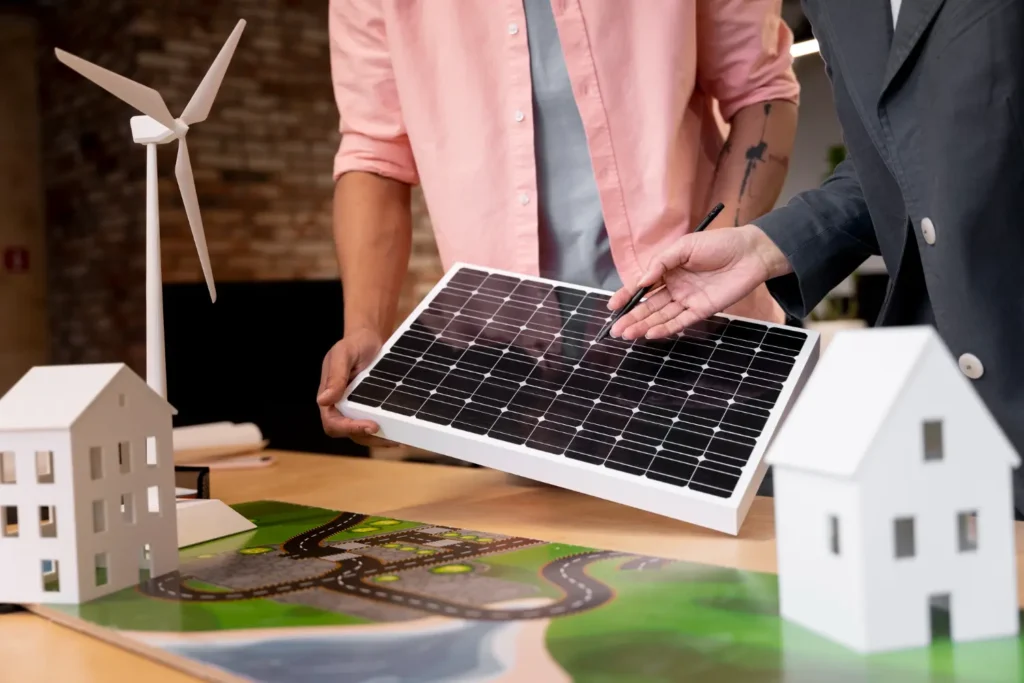
The Course in Residential Solar PV System Design from ICTESS teaches you the calculation methodologies installation companies use on real projects. You will learn to run string configuration calculations applying temperature coefficients per NEC 690.7 and ASHRAE design temperature data, size electrical protections to the applicable code, and estimate annual energy production using solar resource data from recognized sources such as NREL PVWatts. You will also work with the monitoring platforms most used in the sector (SolarEdge, Enphase, Fronius Solar.web) for tracking installations once they are commissioned.
A license is not required to take the course, though basic knowledge of electricity (voltage, current, power, DC and AC circuits) is recommended. The program is designed both for electricians who want to specialize in solar and for technicians with a background in electronics, renewable energy, or engineering who want specific sizing competencies. Keep in mind that performing electrical installation work does require the corresponding state license, but the technical design and sizing can be done without that credential. The course gives you the calculation and design competencies that complement hands-on installation training.
The ICTESS Professional Certificate attests to your technical specialization in residential solar system design and is valued by companies in the sector as high-level professional development. While it is not an accredited academic degree and does not replace the state electrical license, the certificate documents specific technical competencies that are in strong demand: string calculations, inverter selection, code-compliant protection design, and mounting structure sizing. Many installation companies place particular value on this practical technical training because it demonstrates current knowledge of the applicable codes, command of professional calculation methodologies, and the ability to produce documentation ready for permitting and interconnection.
This Course in Residential Solar PV System Design stands apart for its specific focus on the residential segment and the technical depth of its sizing calculations. Where many courses offer general photovoltaic knowledge or concentrate on large-scale installations, this program addresses the particularities of home solar: roofs with multiple orientations, configurations with partial shading, integration with household consumption, and the specific interconnection process. The content includes the real technical calculations installation companies perform: string configuration with temperature coefficients, inverter selection by optimal DC/AC ratio, SPD, fuse and rapid shutdown design to the NEC, and attachment solutions adapted to each roof type.