
Fully online technical training designed around real industry demand, so you can specialize at your own pace.
11/14/2026
Start Date
12 months
Duration
1500
Total Hours
12 Modules
Program
Duration
Total Hours
Program
Start Date
$6039
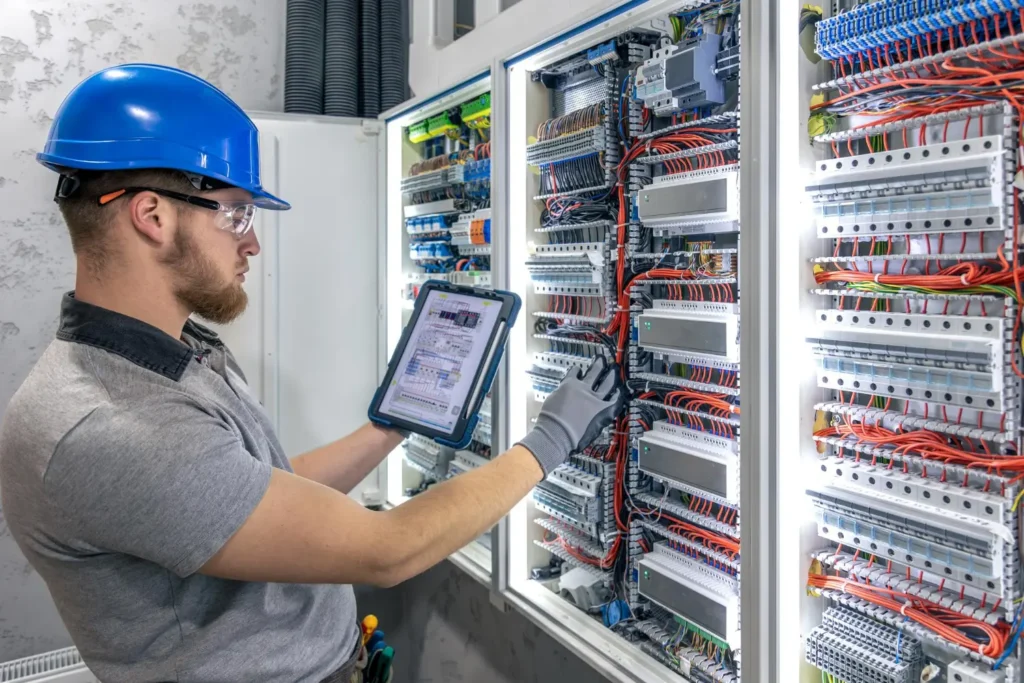
ICTESS’s BMS Building Controls and Monitoring Professional Certificate is designed to train specialists in the design, programming and management of Building Management Systems (BMS) for smart buildings. The program covers everything from automatic control fundamentals to advanced IoT and cloud analytics integration for centralized facility monitoring.
You will learn the engineering calculations behind PID control loops, BMS architecture design with standard protocols such as BACnet, Modbus and OPC UA, professional SCADA interface development and energy optimization strategies through adaptive control. The program includes a Capstone Project in which you will develop the complete design and simulation of a BMS for a real building.
The BMS Building Controls and Monitoring Professional Certificate responds to the growing demand for technical specialists who can design and integrate centralized management systems in large commercial, industrial and residential buildings. The smart building sector needs professionals who master industrial communication protocols, automatic control strategies and advanced energy management for complex facilities.
The goal of the program is to train professionals who can lead building automation projects from design through ongoing operation. You will learn to design distributed control architectures, program controllers with PID algorithms, configure multi-vendor communication networks, develop intuitive monitoring interfaces and optimize energy use through data-driven adaptive control strategies.
The training includes hands-on use of professional BMS platforms used on real projects (Niagara Framework, Desigo CC, EcoStruxure, Metasys). It culminates in a Capstone Project where you will design and simulate a complete BMS for a real building, applying every skill acquired in the technical modules.
The BMS Building Controls and Monitoring Professional Certificate prepares you for specialized technical roles at systems integrators, automation equipment manufacturers, MEP engineering firms and the facility management departments of large organizations. You will be able to work as a BMS systems engineer, automation technical lead, controls programmer or commissioning and startup technician for smart buildings.
The training prepares you to manage complete projects from design to operation: conducting functional requirements studies, designing control architectures to industry standards, preparing technical specifications and design narratives, programming DDC controllers, configuring communication networks and overseeing FAT/SAT acceptance testing.
You will also build the skills to audit existing facilities, propose energy efficiency improvements, implement cybersecurity strategies for control systems and design integration solutions with cloud and IoT platforms. The hands-on approach lets you apply what you learn right away on real projects.
Study from anywhere, with no commuting. Balance your technical specialization with your current job.
Organize your study around your schedule. Move through the modules at your own pace and revisit whatever you need.
Learn Niagara Framework, Desigo CC and BACnet/Modbus protocols, the same tools used on real projects.
Technical video lessons, up-to-date downloadable materials, forums with specialized instructors and hands-on programming exercises.
With ICTESS you will receive specialized technical training focused on professional practice and designed to help you master the skills the building automation industry demands. Learn with up-to-date methodology and real integration tools.
What you'll achieve
Design distributed BMS control architectures, selecting hardware and software based on functional requirements, scalability and compatibility with existing building systems.
Configure industrial communication networks using BACnet, Modbus, OPC UA and MQTT, ensuring interoperability between equipment from different manufacturers.
Program DDC controllers with PID control algorithms, HVAC sequences of operation, lighting management and access control integrated into a unified platform.
Develop professional SCADA interfaces with dashboards, trend graphs, alarm management and historical data to support monitoring and operational decision-making.
Implement energy optimization, cybersecurity and system redundancy strategies, running FAT/SAT commissioning protocols to industry standards.
The smart building sector is growing steadily, driven by the need to reduce energy use and improve the operation of complex facilities. Energy codes such as ASHRAE 90.1 and the IECC require direct digital control (DDC) and automatic control capabilities in many commercial buildings, which is accelerating BMS adoption across the commercial building stock. This creates steady demand for technical professionals specialized in systems integration.
Demand for BMS integration specialists: Employers need technicians who can design control architectures, program controllers and configure multi-vendor communication networks. Filling these positions is often a challenge, especially for profiles that combine open protocols such as BACnet and OPC UA with manufacturer-specific platforms.
Increasingly sought-after multidisciplinary skills: Today’s projects integrate HVAC, lighting, access control, energy management and cloud connectivity into a single platform. Expertise that combines automatic control, industrial communications, cybersecurity and data analytics is increasingly valued by engineering firms and facility management companies.
A competitive edge in the job market: Specialized BMS training sets you apart from generalist building systems profiles. Mastering controller programming, communication protocols, SCADA interface design and commissioning methods makes you a strong candidate at leading smart building companies.
Completing the BMS Building Controls and Monitoring Professional Certificate positions you in a fast-growing sector driven by building digitalization and energy efficiency requirements. Energy codes and green building certifications are creating growing demand for specialists in building automation and centralized technical management.
Access to specialized technical roles: You can pursue positions such as BMS systems engineer, DDC controls programmer, commissioning technician or technology-focused facility manager. Expertise in open protocols and multiple platforms significantly broadens your career options.
Command of professional tools: Hands-on experience with platforms such as Niagara Framework, Desigo CC or EcoStruxure sets you apart in hiring, since these tools are essential at systems integrators and practical proficiency is highly valued by smart building employers.
Ability to lead integration projects: You will build the skills to manage every phase of a BMS project, from architecture design to commissioning and turnover, so you can take on higher-level responsibilities on commercial buildings, hospitals, shopping centers and industrial projects.
A recognized ICTESS Professional Certificate: The ICTESS Professional Certificate validates your technical specialization in BMS systems, strengthening your position in the job market and demonstrating your skills to building automation employers.
This program is designed for professionals and graduates who want to specialize in the design, programming and management of smart building automation systems. Recommended profiles include:
Program details

The Capstone Project is the culminating stage of the program and brings together all the technical skills developed throughout the course. It consists of the complete design and simulation of a BMS for a real building, from defining functional requirements to configuring the monitoring platform, using the professional methods and programming tools applied in the industry.
The project must address a building with multiple subsystems to integrate: HVAC, smart lighting, access control and energy management. You will design the distributed control architecture with controller and field device selection, define the network topology with BACnet or Modbus, program sequences of operation and PID control, develop the SCADA interface with dashboards and trend graphs and configure the alarm and historical data system following industry best practices.
The work also includes defining the system’s cybersecurity and redundancy strategy, designing the commissioning plan with documented FAT/SAT testing and proposing cloud platform integration for advanced operational data analysis. The final documentation must meet the technical level and professional format required for BMS project specifications, demonstrating your ability to produce complete technical documentation you could present to clients or add to your professional portfolio.
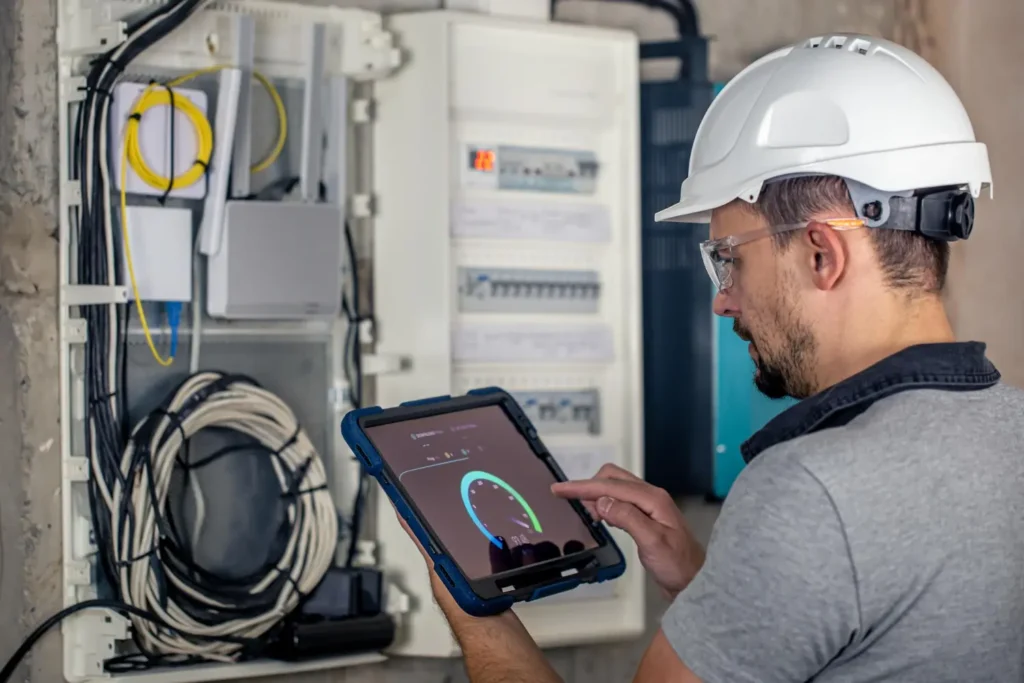
The BMS Building Controls and Monitoring Professional Certificate from ICTESS includes hands-on training with the platforms and tools most widely used in building automation. You will learn to work with Niagara Framework (Tridium), one of the most widely deployed integration platforms in the world, which connects equipment from multiple manufacturers through open protocols. You will also explore environments such as Desigo CC (Siemens), EcoStruxure Building (Schneider Electric) and Metasys (Johnson Controls), understanding their architectures and programming methods. On the protocol side, you will master BACnet IP and MS/TP network configuration, Modbus RTU and TCP communication, OPC UA integration with industrial systems and MQTT for IoT architectures. Proficiency in these tools is highly valued by systems integrators.
An engineering degree or specific building automation experience is not required, although technical training in electrical, electronics, HVAC or telecommunications is recommended. The program is designed mainly for industrial, electronics and controls engineers, but it is also open to associate degree holders in electrical, HVAC or telecommunications systems with a solid technical foundation. Facility management professionals with experience managing complex facilities can also enroll if they have prior knowledge of control systems or communication networks. The program includes advanced content on controller programming and industrial protocol configuration, so you should be comfortable with programming logic, electrical schematics and technical software.
The ICTESS Professional Certificate validates your technical specialization in BMS systems as high-level professional development. While it is not an accredited academic degree, the certificate documents specific, in-demand technical skills: distributed control architecture design, DDC controller programming, BACnet and Modbus configuration, SCADA interface development and the ability to carry out commissioning using FAT/SAT methods. Systems integrators, automation equipment manufacturers and corporate facility management departments value this kind of hands-on training, since it shows you are up to date on current technologies, proficient in real industry platforms and experienced in complete projects developed during the program.
The BMS Building Controls and Monitoring Professional Certificate stands out for its professional focus on commercial and industrial buildings and its technical depth in systems integration. While many home automation courses focus on residential installations with protocols such as KNX or proprietary systems, this program covers large-scale building automation with professional BMS platforms and open industrial protocols. The content includes the real skills integrators use on professional projects: distributed control architecture design, PID algorithm programming for HVAC control, multi-vendor BACnet and OPC UA network configuration, SCADA interface development with alarm and trend management and FAT/SAT commissioning methods. The program also covers critical topics such as control system cybersecurity, redundancy, adaptive energy optimization and cloud and IoT integration, skills rarely included in general home automation training.