
Fully online technical training designed around real industry demand, so you can specialize at your own pace.
11/07/2026
Start Date
8 months
Duration
750
Total Hours
8 Modules
Program
Duration
Total Hours
Program
Start Date
$3700
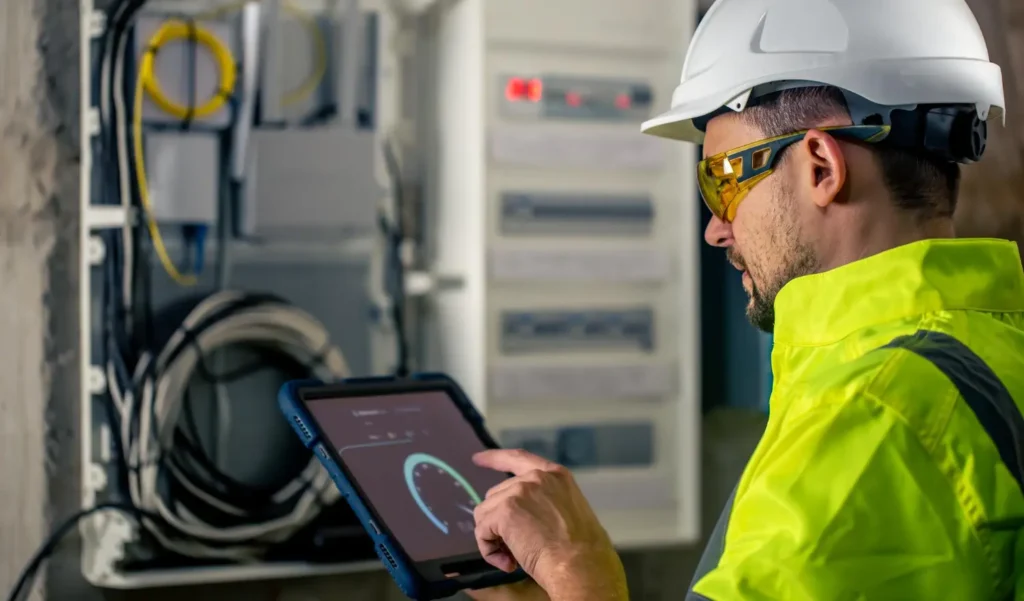
ICTESS’s BMS and Building Controls Specialization is designed to train specialists in the design, programming, and management of centralized automation and control systems for smart buildings. The program covers the most widely deployed Building Management System (BMS) technologies in the industry: BACnet architectures, integration with Modbus and KNX protocols, and control of HVAC, lighting, and shading subsystems.
You’ll learn the professional technical skills applied on real smart-building projects: configuring BACnet points and objects, programming control strategies for HVAC and lighting, managing trends and alarms, multi-protocol integration, implementing energy-efficiency strategies, and commissioning procedures. The specialization includes a Capstone Project where you’ll apply everything you’ve learned to a complete building automation project.
The BMS and Building Controls Specialization answers the growing demand for technicians specialized in automation and centralized system management at commercial and industrial buildings. The construction and facility management industry needs professionals who master both standard communication protocols and advanced control strategies, along with the energy optimization of HVAC, lighting, and other technical building subsystems.
The purpose of this program is to train professionals who can design complete BMS architectures, configure controllers and monitoring points, program control logic for different subsystems, integrate equipment from different manufacturers through open protocols, and manage building operation through supervisory platforms. You’ll learn to implement energy-efficiency strategies, configure alarm and trend systems, and ensure the cybersecurity of connected building systems.
The training includes hands-on work with professional BMS platforms and industrial protocol configuration tools, and culminates in a Capstone Project where you’ll develop a complete project.
The BMS and Building Controls Specialization qualifies you for specialized technical roles at systems integrators, automation manufacturers, building services engineering firms, and facility management departments at large buildings. You can work as a BMS systems technician, controller programmer, smart-building integrator, or operations and maintenance lead for automated building systems.
The training prepares you to manage complete automation projects: designing BACnet control architectures, configuring controllers and monitoring points, programming control logic for HVAC and lighting, integrating subsystems through Modbus and KNX protocols, configuring operator interfaces, and carrying out commissioning procedures through to startup.
You’ll also build skills to implement energy-efficiency strategies in buildings, configure alarm and reporting systems, apply cybersecurity measures on control networks, and optimize the overall performance of building systems. The hands-on approach lets you apply this knowledge immediately on real projects in the industry.
Study from anywhere with no commuting required. Balance your technical specialization with your current job.
Organize your study time around your own schedule. Move through the modules whenever works best for you and reinforce whatever you need.
Master BACnet, Modbus, and KNX in a single program. Learn to integrate equipment from different manufacturers in open architectures.
Technical video lessons, up-to-date downloadable materials, forums with specialized instructors, and hands-on configuration exercises.
With ICTESS, you’ll get specialized technical training focused on professional practice and designed to help you master the skills the building automation industry demands. Learn with an up-to-date methodology and real-world BMS project cases.
What you'll achieve
Design complete BMS architectures by defining control, supervision, and management levels, configuring BACnet points using standard naming conventions and industry best practices.
Program control strategies for HVAC, lighting, and shading systems, implementing regulation logic, schedules, and comfort conditions per applicable comfort standards (ASHRAE 55) and efficiency criteria.
Configure trend, alarm, and reporting systems to monitor building performance, detect anomalies, and generate operation and energy-consumption reports.
Integrate equipment and subsystems from different manufacturers using Modbus RTU/TCP and KNX protocols, ensuring interoperability in multi-protocol BMS architectures.
Perform commissioning and startup procedures for BMS systems, verifying control points, calibrating sensors, and validating operating strategies.
The smart-buildings sector is experiencing steady growth driven by tightening building energy codes and decarbonization goals for the building stock. Buildings account for a substantial share of total energy consumption in the United States, which makes automation and efficient control a strategic priority. This scenario is driving growing demand for technicians specialized in BMS systems.
Shortage of professionals with integration skills: The job market struggles to find technicians who simultaneously master BACnet, Modbus, and KNX protocols and can design complete control architectures. Most professionals in the field have partial knowledge of a single technology, which limits their ability to take on multi-protocol integration projects.
Increasingly complex, connected buildings: Today’s projects integrate HVAC, lighting, access control, security systems, and energy management on unified platforms. This complexity demands versatile professionals who can configure diverse subsystems, ensure their interoperability, and optimize a building’s overall performance from a holistic perspective.
Cybersecurity as an essential requirement: Connecting BMS systems to corporate networks and the internet exposes buildings to vulnerabilities that must be managed professionally. Mastering network segmentation best practices, access management, and industrial protocol protection positions you as a well-rounded professional in an increasingly critical part of the industry.
Completing the BMS and Building Controls Specialization positions you in a sector in steady expansion, driven by building digitalization and tightening energy-efficiency requirements. Commercial buildings, hospitals, shopping centers, and corporate headquarters all demand technicians who can manage increasingly complex, integrated automation systems.
Access to high-demand technical roles: You can pursue positions like BMS technician, controller programmer, smart-building integrator, or facility management lead. The shortage of professionals with real mastery of BACnet, Modbus, and KNX creates opportunities with competitive conditions at systems integrators and engineering firms.
Mastery of industry-standard protocols: Deep knowledge of BACnet as the native BMS protocol, plus integrating Modbus and KNX devices, sets you apart in hiring. Companies value technicians who work with open architectures and multi-manufacturer equipment.
Ability to optimize existing buildings: You’ll learn to audit installations, propose energy-efficiency improvements, and modernize outdated control systems. This is especially valued on energy retrofit projects for commercial buildings pursuing LEED certification.
Recognized professional certificate: The ICTESS Professional Certificate validates your specialized training in BMS and building controls, strengthening your job market position and confirming your competencies to automation and building-systems companies.
This specialization is designed for professionals and technicians looking to specialize in the design, programming, and management of centralized building automation and control systems. Recommended profiles include:
Program details

The Capstone Project is the culmination of the program and represents the practical integration of every technical skill built throughout the specialization. It consists of developing a complete real-world building automation project, from BMS architecture design through defining the commissioning procedures, applying the professional methodologies and configuration standards used in the industry.
The project covers a representative building type, such as an office building, hotel, shopping center, or another representative occupancy. You’ll design the BACnet control architecture by defining network levels and topology, configure the point list using standard naming conventions, program control strategies for HVAC and lighting with schedules and comfort conditions, design the Modbus and KNX subsystem integration, configure the alarm, trend, and reporting system, and define the applicable energy-efficiency strategies.
The project also includes designing the cybersecurity plan with network segmentation and access management, preparing the commissioning protocol with point-by-point verification, and documenting operator interfaces for maintenance staff. The final deliverable must be presented at the technical level and professional format required for BMS integration project reports, demonstrating your ability to produce complete documentation suitable for delivery to industry clients.

ICTESS’s BMS and Building Controls Specialization trains you in the three fundamental protocols of the building automation industry: BACnet as the native protocol for BMS supervision and centralized control, Modbus RTU/TCP for integrating industrial equipment, energy meters, and field controllers, and KNX for lighting, shading, and room-control subsystems. You’ll learn to configure BACnet points following standard naming conventions, parameterize multi-protocol integration gateways, and design architectures that combine equipment from different manufacturers on a single unified platform. The hands-on approach includes configuration exercises with real commercial-building case studies where you’ll apply what you’ve learned about each protocol.
Specific building automation experience isn’t required, but technical training in electrical work, HVAC, telecommunications, or facilities maintenance is recommended. The specialization is designed for maintenance technicians, installers with HVAC or electrical experience, and engineers looking to specialize in the smart-buildings sector. It’s important to have basic electrical knowledge, the ability to read technical diagrams, and familiarity with communication network concepts. If you already work in building or facility maintenance and want to move into technical management roles for automated systems, this program gives you the skills you need to make that career move.
The ICTESS Professional Certificate validates your specialized technical training in BMS and building controls, documenting skills highly sought after by systems integrators, building services engineering firms, and facility management departments. While it isn’t an official university degree, the certificate documents hands-on knowledge of BACnet, Modbus, and KNX protocols, control architecture design, HVAC and lighting strategy programming, and commissioning procedures. Companies in the industry particularly value this hands-on technical training because it demonstrates real ability to handle integration projects, configure multi-protocol systems, and manage the startup of automated installations. The certificate complements your base credential and shows you’re current on the industry’s technologies and methodologies.
The BMS and Building Controls Specialization stands out for its professional focus on commercial and industrial buildings and its technical depth in industry-standard protocols. While many home automation courses focus on residential homes with proprietary systems, this program addresses automation at large-scale buildings: offices, hotels, hospitals, shopping centers, and industrial facilities. The content covers real BMS architectures with multiple control levels, multi-protocol integration between equipment from different manufacturers, energy-efficiency strategies for code compliance, cybersecurity applied to control networks, and professional commissioning procedures. The specialization also covers aspects that rarely appear in generalist courses: trend and alarm management, reporting for facility management, and technical documentation to professional standards.