
Fully online technical training designed around real industry demand, so you can specialize at your own pace.
10/31/2026
Start Date
2 months
Duration
100
Total Hours
6 Modules
Program
Duration
Total Hours
Program
Start Date
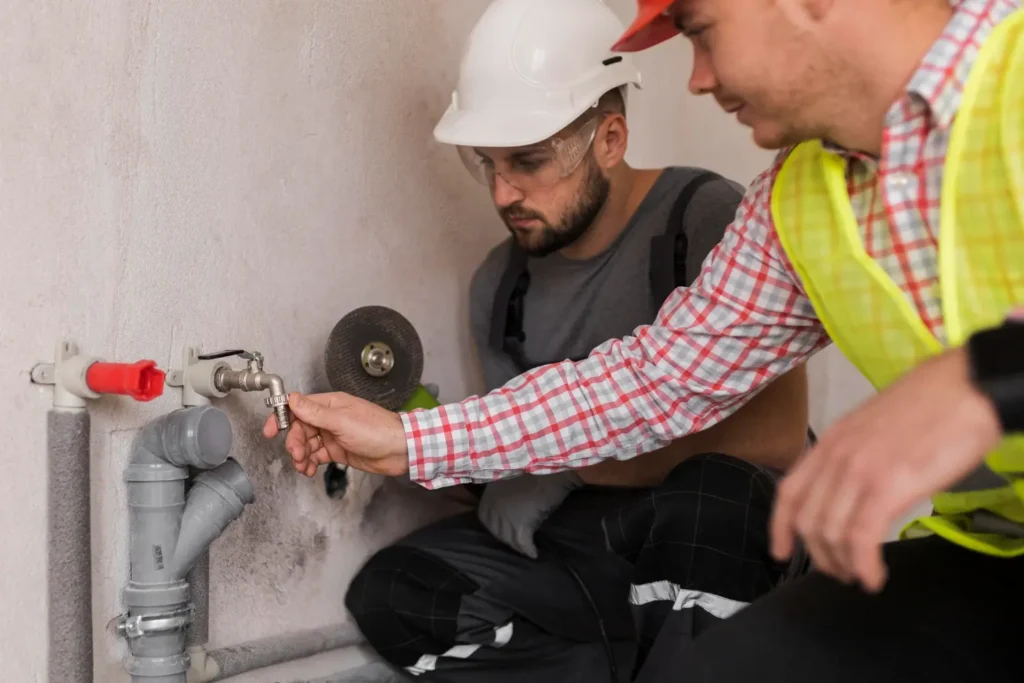
ICTESS’s Plumbing Safety Training Course trains professionals to identify, assess and prevent the occupational hazards specific to plumbing and water piping work. The program covers the main risk areas: working at heights, confined spaces, chemical handling, cutting and welding operations, and lockout/tagout (LOTO) procedures.
You will learn the safety protocols required under OSHA standards: how to select and correctly use personal protective equipment (PPE), assess hazards before each job, follow safe work procedures in trenches, excavations and utility vaults, manage work permits, and respond to emergencies. The course includes a Capstone Project where you will apply everything you have learned by developing a safety plan for a real facility.
The Plumbing Safety Training Course responds to the critical need to reduce workplace injuries in the building services sector. Plumbing involves specific hazards that go beyond general construction risks: exposure to chemical agents, work in confined spaces with hazardous atmospheres, handling of welding equipment, and work at heights on scaffolds or ladders that requires specialized training.
The purpose of the course is to train professionals who can identify hazards before starting any job, select the right PPE for each task, apply lockout/tagout procedures to isolate systems, work safely in confined spaces by following ventilation and rescue protocols, and properly manage the work permits required under OSHA regulations.
The training includes practical knowledge of the OSHA framework that applies to the trade (the OSH Act, the 29 CFR 1926 construction standards and the 29 CFR 1910 general industry standards). It concludes with a Capstone Project in which you will develop a complete safety plan applying every safety competency gained throughout the program.
The Plumbing Safety Training Course prepares you for safety roles at plumbing contractors, industrial maintenance companies, building technical services, and the facilities departments of hotels, hospitals and industrial plants. You can work as a designated competent person on job sites, plumbing crew safety lead, special operations coordinator, or building systems technician with documented safety training.
The training prepares you to assess specific hazards before each job, select and inspect PPE to ANSI standards, apply LOTO procedures to isolate water, gas and electrical systems, supervise confined space work with atmospheric testing and rescue plans, and manage the safety documentation required on job sites.
You will also build skills to train coworkers in safe work practices, take part in incident investigations, propose safety improvements to work procedures, and collaborate with external safety consultants. The hands-on approach lets you apply what you learn directly on any job site or facility in the trade.
Study from anywhere, with no commute. Fit this technical specialization around your current work schedule.
Plan your study time around your own availability. Move through the modules at your own pace and go back to any topic you want to reinforce.
Learn with updated materials based on the OSH Act, OSHA construction and general industry standards, and ANSI standards for protective equipment.
Technical video lessons, case studies of real incidents and forums with specialized instructors.
With ICTESS, you will receive specialized technical training in occupational safety, focused on professional practice and designed to help you master the safety competencies the plumbing and building services industry demands.
What you'll achieve
Identify specific hazards in plumbing work and select the right PPE under ANSI standards for each type of task and exposure.
Apply safe work procedures at heights with ladders, scaffolds and aerial lifts, complying with OSHA 29 CFR 1926 Subpart M and inspecting fall arrest systems.
Execute confined space entry protocols: atmospheric testing, forced-air ventilation, continuous communication and rescue plans under OSHA 29 CFR 1926 Subpart AA and 1910.146.
Implement lockout/tagout (LOTO) procedures under OSHA 29 CFR 1910.147 to isolate water, gas and electrical systems before maintenance work.
Manage work permits and the safety documentation required on job sites, including job-specific hazard assessments and site-specific safety plans.
Plumbing and building services work involves some of the most serious hazards in construction. Confined space incidents carry an especially high fatality risk, and falls remain a leading cause of serious injuries and deaths in construction. OSHA standards require employers to train workers before they perform high-hazard tasks, which makes this specialization essential.
Legal requirement for high-hazard work: The OSH Act and OSHA standards require specific training for work at heights, confined space entry and tasks involving hazardous chemicals. Without documented training, workers should not perform these tasks, and employers face serious citations for noncompliance.
Growing demands from industrial clients: Large clients such as hospitals, hotels, industrial plants and public agencies increasingly require plumbing technicians to show documented safety training. Many of them include this requirement in their contractor prequalification processes before awarding work.
Professional differentiation: Specializing in occupational safety sets you apart from plumbers without specific safety training. Mastering LOTO procedures, confined space protocols and work permit management positions you as a trusted professional for critical work in complex facilities.
Completing the Plumbing Safety Course positions you as a professional with documented safety training, a profile employers increasingly seek. OSHA requires specific training for high-hazard work, and employers want technicians who work independently while following safety protocols.
Ability to take on competent person responsibilities: You’ll be prepared to serve as a competent person on job sites, as designated by your employer under OSHA, supervising high-hazard work like confined spaces, heights, or welding. This opens doors to greater responsibility, often required in public-sector contracts and by large industrial clients.
Fewer incidents and citations: Mastering safety procedures significantly reduces workplace incidents for you and your crew. That means fewer lost-time injuries, lower company costs, and less exposure to OSHA citations and penalties, which can be substantial.
Access to specialized work: Confined space, heights, and chemical exposure tasks require documented training. This course prepares you for specialized jobs that often pay more than conventional plumbing work.
Recognized professional certificate: ICTESS’s certificate validates your training in plumbing safety, strengthening your job market position and demonstrating your skills to building services employers.
This course is designed for plumbing and building services professionals who need documented training in occupational safety for high-hazard work. Recommended profiles include:
Program details

The Capstone Project is the culminating stage of the training and represents the practical integration of every safety competency developed throughout the program. It consists of a complete safety plan for a real plumbing facility, from initial hazard identification through emergency response procedures, applying professional methodologies and current OSHA standards.
The project must include a hazard assessment specific to the selected facility, a justified selection of PPE for the tasks involved, safe work procedures for each high-hazard activity, LOTO protocols to isolate water and gas systems, the work permits needed for confined space entry and work at heights, and an emergency and rescue plan with equipment and personnel resources.
The project also includes the complete safety documentation it requires: Safety Data Sheets (SDS) for chemical products, PPE issuance records, pre-task checklists for high-hazard work, and multi-employer coordination records. The final documentation must meet the technical level and professional format of a site-specific safety plan, demonstrating your ability to manage occupational safety in plumbing facilities of any complexity.
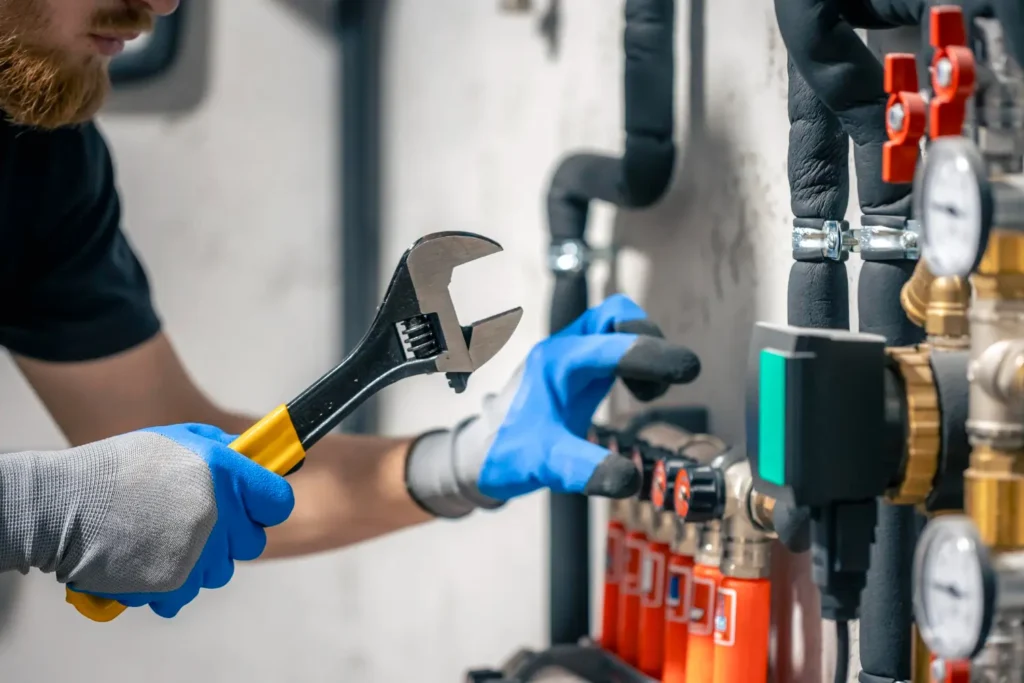
ICTESS’s Plumbing Safety Training Course includes practical training on the OSHA framework that applies to the plumbing trade: the Occupational Safety and Health Act (OSH Act), the 29 CFR 1926 construction standards (including Subpart M for fall protection, Subpart P for excavations and Subpart AA for confined spaces), 29 CFR 1910.146 for permit-required confined spaces, 29 CFR 1910.147 for lockout/tagout, and 29 CFR 1910.132 for PPE. You will learn to interpret these standards and apply them to real work situations, selecting PPE under the corresponding ANSI standards (ANSI/ASSP Z359.11 for harnesses, ANSI/ISEA Z89.1 for hard hats, ANSI/ISEA 105 for hand protection), designing safe work procedures and managing the safety documentation each standard requires.
A state plumbing license is not required, although experience or prior training in building services is recommended. The course is designed for working plumbers, maintenance technicians and building services professionals who need specific safety training. It is also open to graduates of plumbing, heating or building services trade programs who want to round out their profile with occupational safety skills. The program includes technical content on trade-specific hazards, so it helps to know common plumbing operations (welding, cutting, pipe handling) to get the most out of the safety training.
ICTESS’s professional certificate documents specific safety training for plumbing work, including confined space procedures: hazard assessment, atmospheric testing, ventilation, communication and rescue plans. However, under OSHA, your employer is responsible for training and authorizing confined space entrants, attendants and entry supervisors, and for certifying that this training has been completed. Each employer or client may also require additional credentials, medical evaluations (for example, for respirator use) or hands-on in-person training under its own safety management system. The course gives you the core technical knowledge the standards call for, but you should confirm the specific requirements for each job site or facility with your employer or client.
The Plumbing Safety Training Course stands out for its specific focus on the hazards of the plumbing and building services trade. OSHA 10-hour and 30-hour Outreach courses cover general construction safety topics. This program focuses only on the hazards plumbers face: work in utility vaults and confined spaces, welding of copper and polyethylene piping, handling chemicals such as fluxes and sealants, LOTO procedures to isolate water systems, and work permit management for special operations. The content includes real industry case studies, plumbing-specific protocols and safety documentation tailored to everyday installation and maintenance work. This course does not replace OSHA Outreach training and does not include a DOL completion card.