
Fully online technical training designed around real industry demand, so you can specialize at your own pace.
10/31/2026
Start Date
2 months
Duration
100
Total Hours
6 Modules
Program
Duration
Total Hours
Program
Start Date
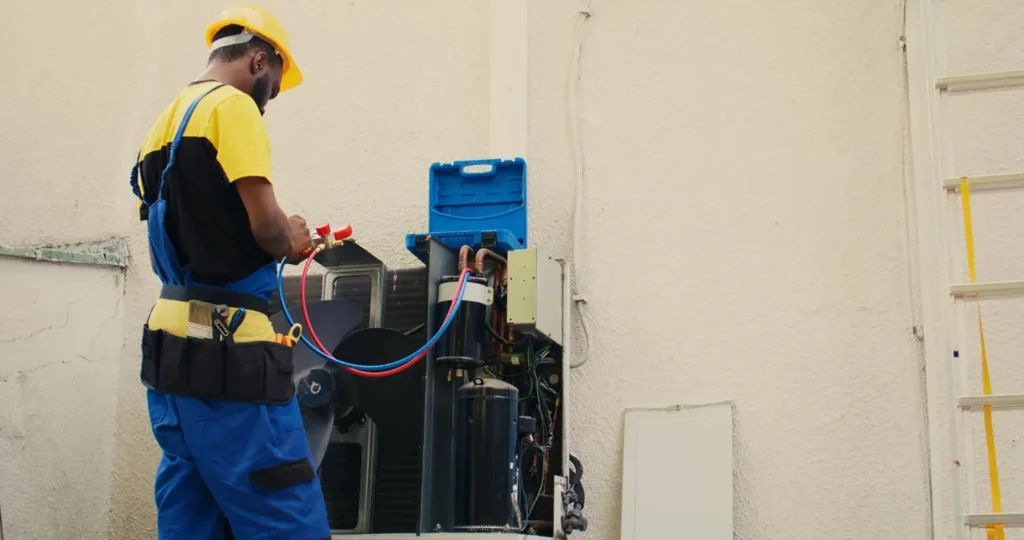
ICTESS’s VRV Maintenance Training Course provides specialized technical training in maintaining variable refrigerant flow HVAC systems. The program covers the VRV/VRF technologies used in commercial, institutional, and industrial installations, ranging from system fundamentals to advanced diagnostic techniques.
You’ll learn the preventive and corrective maintenance procedures technicians apply on real installations: interpreting alarm codes, checking pressures and temperatures, verifying refrigerant flow rates, cleaning heat exchangers, analyzing energy performance, and optimizing operating parameters. The course includes a Capstone Project where you’ll apply everything you’ve learned to a comprehensive maintenance case study.
VRV (Variable Refrigerant Volume) and VRF (Variable Refrigerant Flow) systems dominate the HVAC market in commercial and institutional buildings thanks to their energy efficiency and zoning flexibility. The growth of these installations drives steady demand for specialized technicians who can keep this equipment running at optimal performance.
The purpose of this course is to train professionals who can carry out complete preventive maintenance plans, diagnose faults by interpreting alarms and system parameters, perform technical performance checks, and recommend corrective actions that optimize operation. You’ll learn to work safely on installations with large refrigerant charges and to document service calls according to professional protocols.
The training covers diagnostic tools specific to VRV systems (digital manifold gauges, contact thermometers, clamp meters, manufacturer software) and culminates in a Capstone Project where you’ll develop a comprehensive maintenance plan applying everything you’ve learned.
The VRV Maintenance Training Course qualifies you for specialized roles at HVAC maintenance companies, manufacturer-authorized service centers, facilities departments at large buildings, and installation companies with maintenance contracts. You can work as a VRV/VRF maintenance technician, HVAC systems manager, or after-sales service technician for equipment distributors.
The training prepares you to run preventive maintenance routines per manufacturer protocols, diagnose faults by interpreting alarm codes and operating parameters, perform performance checks by measuring pressures, temperatures, and electrical draw, and recommend efficiency improvements on existing installations.
You’ll also build skills to manage the technical documentation of service calls, complete work orders with relevant data, and communicate the condition of an installation to clients in professional terms. The hands-on approach lets you apply this knowledge immediately on real VRV installations in the commercial and institutional sector.
Study from anywhere with no commuting required. Balance your technical specialization with your current job.
Organize your study time around your own schedule. Move through the modules whenever works best for you and reinforce whatever you need.
Learn VRV/VRF maintenance procedures aligned with applicable US mechanical codes and real manufacturer protocols.
Technical video lessons, up-to-date downloadable materials, forums with specialized instructors, and hands-on diagnostic case studies.
With ICTESS, you’ll get specialized technical training focused on professional practice and designed to help you master the maintenance skills the VRV/VRF HVAC industry demands. Learn with an up-to-date methodology and real-world industry procedures.
What you'll achieve
Execute preventive maintenance plans on VRV/VRF systems, applying manufacturer protocols, EPA Section 608 refrigerant regulations, and safety procedures for fluorinated refrigerants.
Interpret alarm codes and diagnose faults through analysis of operating parameters, fault history, and systematic component checks.
Perform performance checks by measuring pressures, temperatures, flow rates, and electrical draw to assess the technical condition of a VRV installation.
Carry out cleaning of heat exchangers, filters, and critical components following established schedules and technical procedures.
Recommend basic system optimizations by analyzing operating parameters, setpoint adjustments, and operating mode configuration.
The VRV/VRF systems market is experiencing steady growth driven by building energy-efficiency requirements and the broader push toward decarbonization across the commercial sector. VRV systems already installed across the United States require specialized maintenance, and industry forecasts indicate this technology will keep dominating the commercial and institutional HVAC segment for decades to come.
Shortage of specialized VRV technicians: The HVAC industry struggles to find technicians with specific training in variable refrigerant flow systems. Many professionals know conventional equipment but lack the skills to diagnose and maintain complex VRV installations with multiple indoor units and heat-recovery systems.
Growing technical complexity of installations: Modern VRV systems integrate advanced technologies such as variable-frequency inverters, electronic expansion valves, simultaneous heat-recovery systems, and centralized management platforms. This complexity demands technicians with specific training who can interpret parameters and diagnose faults in interconnected systems.
Increasingly demanding regulatory requirements: Federal EPA refrigerant regulations (Section 608), applicable mechanical codes, and mandatory maintenance protocols set technical requirements that only professionals with up-to-date training can meet. Specializing in VRV maintenance positions you as a qualified technician able to meet these regulatory demands on HVAC installations.
Completing the VRV Maintenance Training Course positions you in a technical segment with high demand for specialized professionals. VRV/VRF systems dominate the HVAC market in commercial buildings, hotels, offices, and healthcare facilities, creating steady demand for qualified technicians to maintain and optimize them.
Specialization in high-demand technology: VRV systems are the most widely installed technology in commercial HVAC because of their efficiency and versatility. Specializing in their maintenance sets you apart from generalist technicians and gives you access to higher-value maintenance contracts on complex installations.
Advanced diagnostic ability: Mastering alarm interpretation and operating-parameter analysis turns you into a technician capable of resolving complex faults other professionals can’t diagnose. This skill is especially valued by maintenance companies and manufacturer-authorized service centers.
Professional versatility across the industry: The skills you gain transfer across VRV/VRF brands and models, since the operating and diagnostic principles are shared. You’ll be able to work with Daikin, Mitsubishi Electric, LG, Samsung, Toshiba, and other leading brands.
Recognized professional certificate: The ICTESS Professional Certificate validates your specialized technical training in VRV maintenance, strengthening your position in the job market and confirming your competencies to HVAC employers.
This course is designed for HVAC and refrigeration professionals looking to build technical specialization in maintaining VRV/VRF systems. Recommended profiles include:
Program details

The Capstone Project is the culmination of the program and represents the practical integration of every technical skill built throughout the course. It consists of developing a complete maintenance plan for a real or simulated VRV installation, applying the professional procedures and diagnostic methodologies used in the industry.
The project must include an analysis of the installation (system configuration, indoor and outdoor units, refrigerant circuits), the design of a preventive maintenance plan with specific service intervals and tasks, inspection checklists for periodic verifications, a diagnostic protocol for alarms with a decision tree for the most common error codes, and proposed performance indicators to assess the installation’s technical condition.
The project also covers planning the cleaning of heat exchangers and filters, defining system optimization criteria based on operating parameters, and preparing technical documentation for the service record. The final deliverable must be presented in the professional format used by maintenance companies, demonstrating your ability to manage VRV installation maintenance with technical rigor and a systematic methodology.
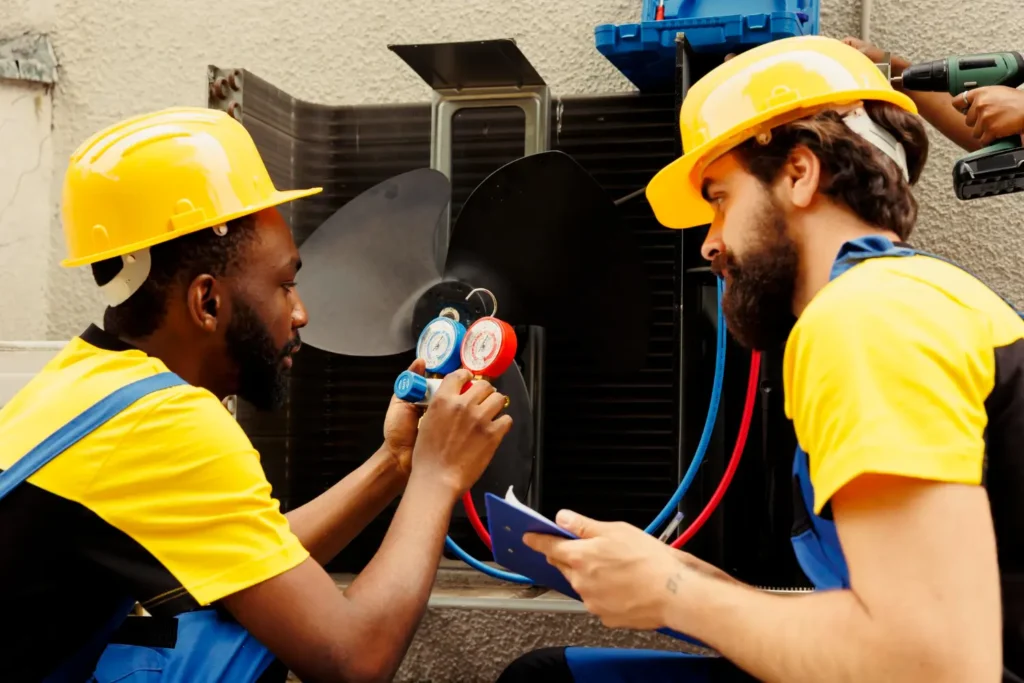
ICTESS’s VRV Maintenance Training Course includes training on diagnostic tools specific to variable refrigerant flow systems. You’ll learn to work with digital manifold gauges for measuring high- and low-side pressures, contact and infrared thermometers for checking temperatures at heat exchangers and refrigerant lines, clamp meters for checking compressor and fan current draw, and refrigerant leak detectors. We’ll also cover reading data through the diagnostic interfaces and monitoring software manufacturers provide to access internal system parameters, alarm history, and unit configuration. Mastering these tools is essential to performing performance checks and diagnosing faults on professional VRV installations.
You don’t need to hold EPA Section 608 certification to take this course, though prior technical training in refrigeration and HVAC is recommended. The course is designed for technicians with basic knowledge of the refrigeration cycle, HVAC system components, and how direct-expansion equipment operates. If you already hold refrigerant handling certification, the course will build on it with maintenance skills specific to VRV systems. If you don’t have it yet, you’ll still be able to apply the course’s theoretical content, though working professionally on equipment with fluorinated refrigerants requires obtaining the appropriate EPA Section 608 certification under applicable federal regulations. The program covers applicable regulations and refrigerant safety procedures.
The ICTESS Professional Certificate documents your specialized technical training in VRV/VRF maintenance and is valued by HVAC companies as specialized supplementary training. The certificate covers specific, high-demand technical skills: running preventive maintenance plans, diagnosing faults through alarm interpretation, performance checks, and system optimization. Maintenance companies, authorized service centers, and facilities departments particularly value this hands-on training because it demonstrates current knowledge of a highly complex technology. The certificate complements official credentials and mandatory certifications (such as EPA Section 608), adding VRV specialization that sets your profile apart in the industry’s hiring processes.
The VRV Maintenance Training Course stands out for its exclusive focus on variable refrigerant flow systems, the technology that dominates commercial and institutional HVAC. While general HVAC courses cover multiple technologies at a surface level, this program goes deep into the maintenance, diagnostic, and optimization procedures specific to VRV/VRF installations. The content covers the alarm codes unique to these systems, performance checks adapted to inverter-driven equipment and electronic expansion valves, and preventive maintenance protocols from leading manufacturers. The hands-on approach, built around real diagnostic case studies, prepares you to handle situations you’ll actually face on professional installations, not just learn general refrigeration theory.